
A commercial diving course takes weeks, not days. ADAS Part 1 and Part 2 each run for around a month, and Part 4 saturation training takes about three weeks. That’s a long time to be away from the people you love, so many of our students bring a partner, and some bring the whole family.
Tasmania makes that easy. While you train, they explore. On your days off, you explore together. And when the course finishes, you can turn the trip into a proper holiday.
Our Tasmanian sites are in the north: Beauty Point on the Tamar River (Part 1, Part 2 and Onshore Supervisor) and Lake Cethana near Sheffield (Part 3 and Part 4). For the best of the north (Cradle Mountain, the Tamar wine route, penguins, devils and caves), read our guide to 10 things to do on your days off in Tasmania. This guide covers the rest of the island: the big-name experiences in Hobart, on the Tasman Peninsula and down the east coast, plus how to book Tasmania’s two famous multi-day walks.
How far is everything?
Tasmania is compact, but the roads are winding, so allow a bit more time than the map suggests. Approximate driving times:
- 45 minsBeauty Point to Launceston
- 2.5 hrsLaunceston to Hobart
- 2.5 hrsLaunceston to Freycinet
- 90 minsHobart to Port Arthur
During the course, base yourselves close to training (our Tasmania accommodation page has places we recommend) and save the south and east coast for weekends and the days after your course. A handy trick is to fly into one city and out of the other: Hobart and Launceston both have airports.
Jump to:
- 1. Hobart and Salamanca
- 2. MONA
- 3. kunanyi / Mount Wellington
- 4. Port Arthur Historic Site
- 5. Fortescue Bay
- 6. Freycinet and Wineglass Bay
- 7. Wineries
- 8. Tasmanian whisky and gin
- 9. Bruny Island
- 10. Maria Island
- 11. The Three Capes Track
- 12. The Overland Track
- Weekend getaways
- A week after your course
- Booking cheat sheet
The big Tasmanian experiences
 Photo: Stu Gibson / AWBF, CC BY-SA 4.0
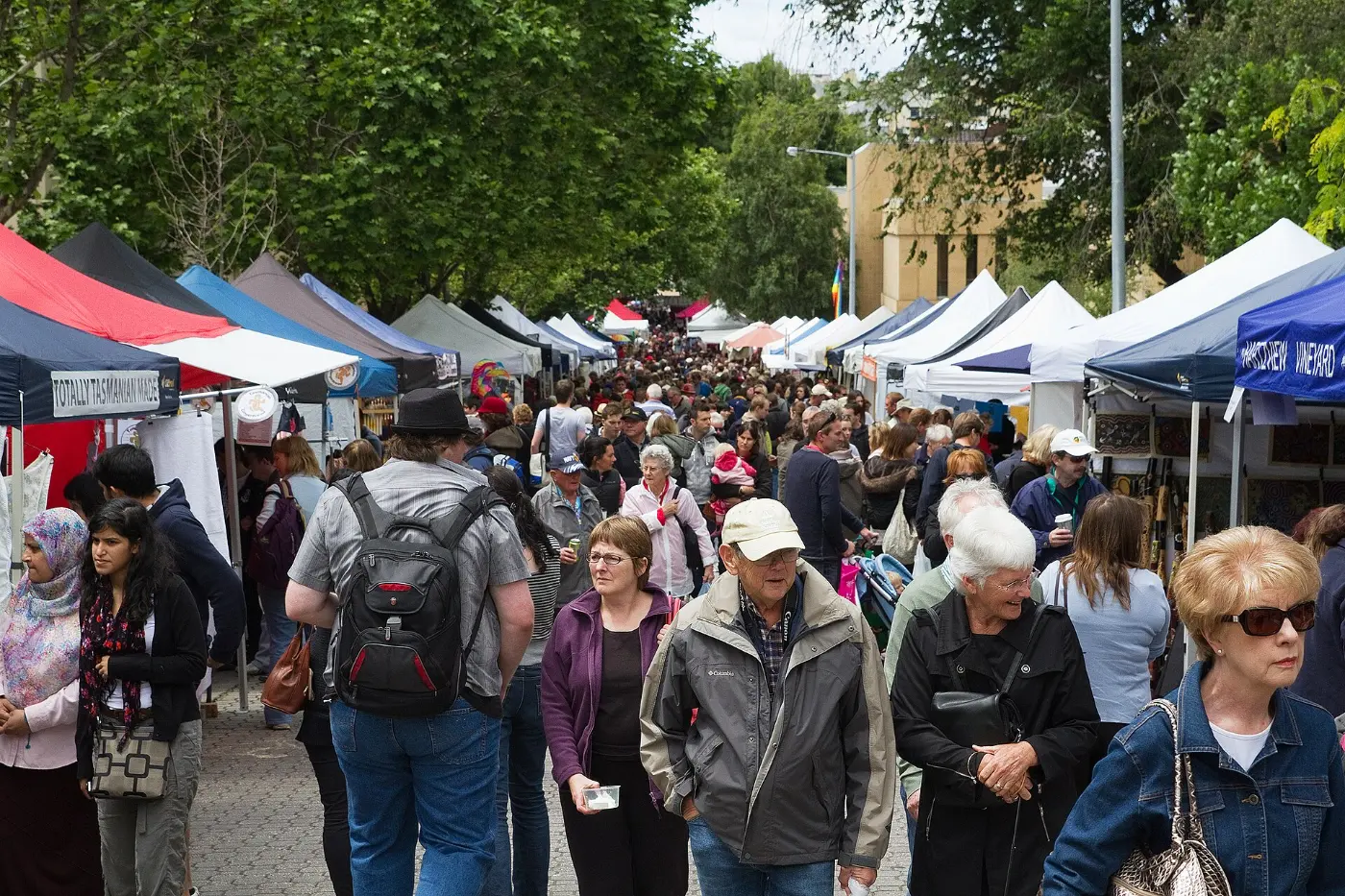 Photo: JJ Harrison, CC BY-SA 3.0
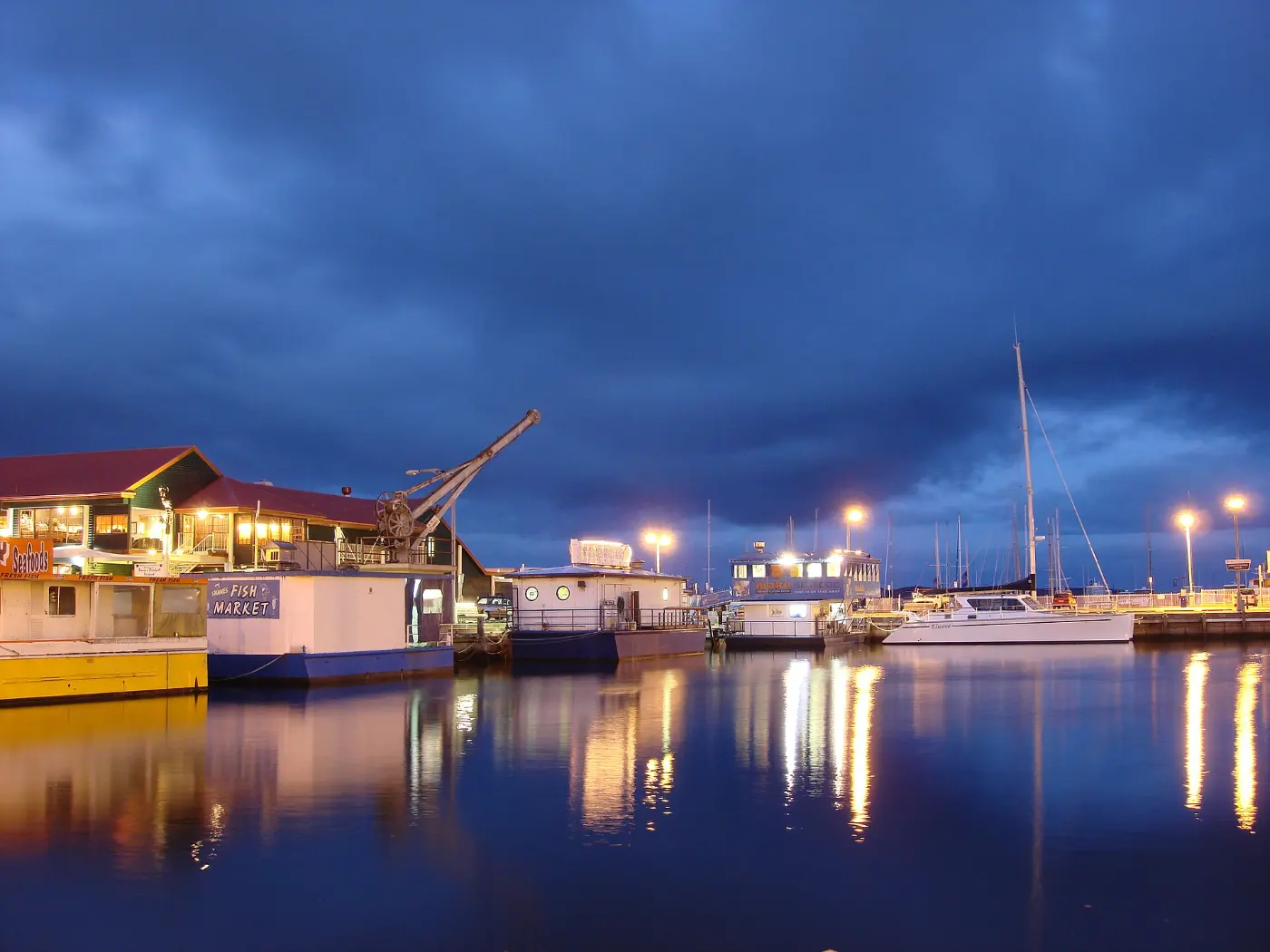 Photo: Jorge Láscar, CC BY 2.0
Hobart’s waterfront, Salamanca Market and Battery Point
- WhereCentral Hobart
- From LauncestonAbout 2.5 hrs by car
- Best daySaturday (market day)
Hobart is Australia’s second-oldest capital, built around a deep-water harbour at the foot of kunanyi / Mount Wellington. It’s small enough to explore on foot, and it’s the obvious first weekend away for couples training in the north.
Start at Salamanca Place, a row of 1830s sandstone warehouses that now house galleries, cafés, bars and restaurants. Every Saturday from 8.30am to 3pm, Salamanca Market fills the street with hundreds of stalls selling Tasmanian produce, woodwork, art and street food. On Sunday mornings the Farm Gate Market takes over Bathurst Street from 8.30am to 1pm, and it’s all about local growers and makers.
From Salamanca, climb Kelly’s Steps into Battery Point, the old maritime village of tiny cottages, bakeries and pubs. Then wander back along the docks to Constitution Dock for fish and chips straight off the floating punts, and finish with a drink overlooking the fishing boats at sunset.
Time it right and the harbour fills with boats. The Australian Wooden Boat Festival, Tasmania’s largest free festival, takes over the whole waterfront every second year with around 400 wooden boats and tall ships. The next one runs from 5 to 8 February 2027 and opens with the Parade of Sail up the River Derwent. And between Christmas and New Year, the Sydney to Hobart yacht race fleet sails in to finish at Constitution Dock.
Tip: Book dinner ahead on summer weekends, and park in the multi-storey car parks on Argyle Street or in Salamanca rather than circling the waterfront.
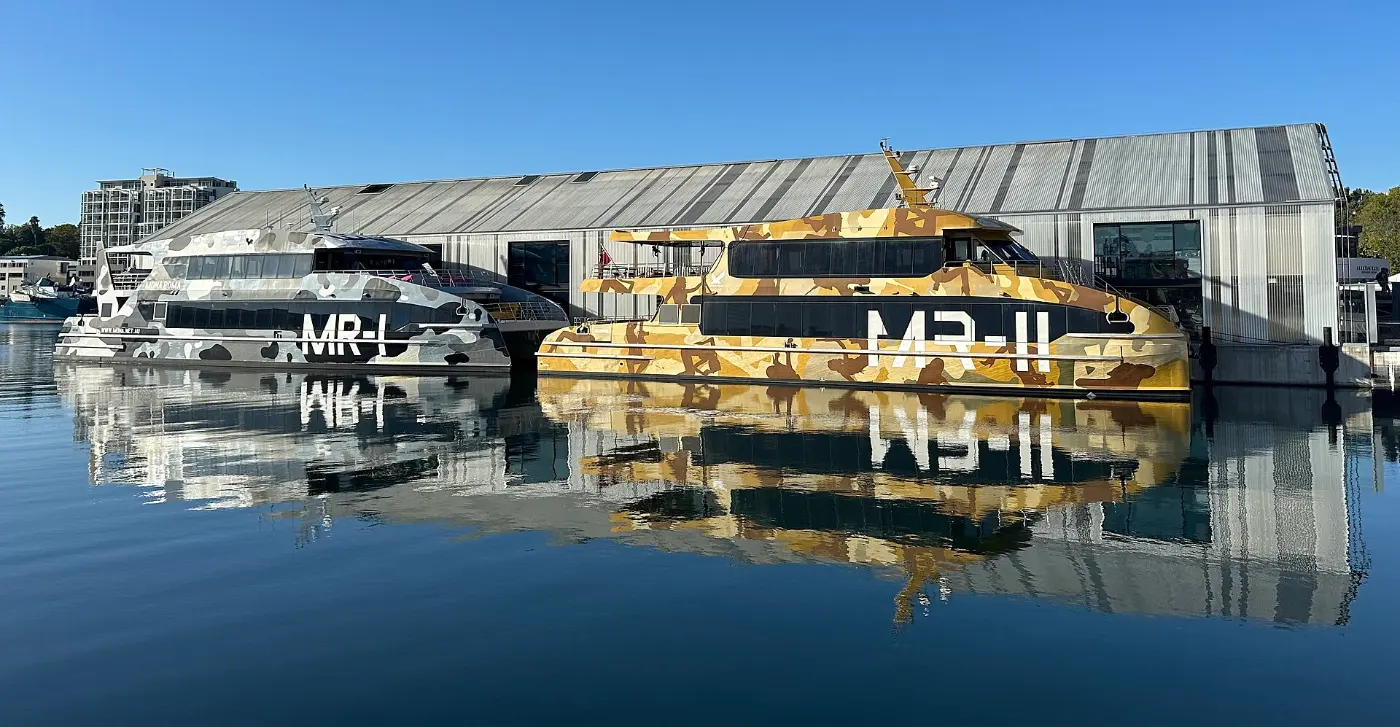 Photo: Tom Ackroyd, CC BY-SA 4.0
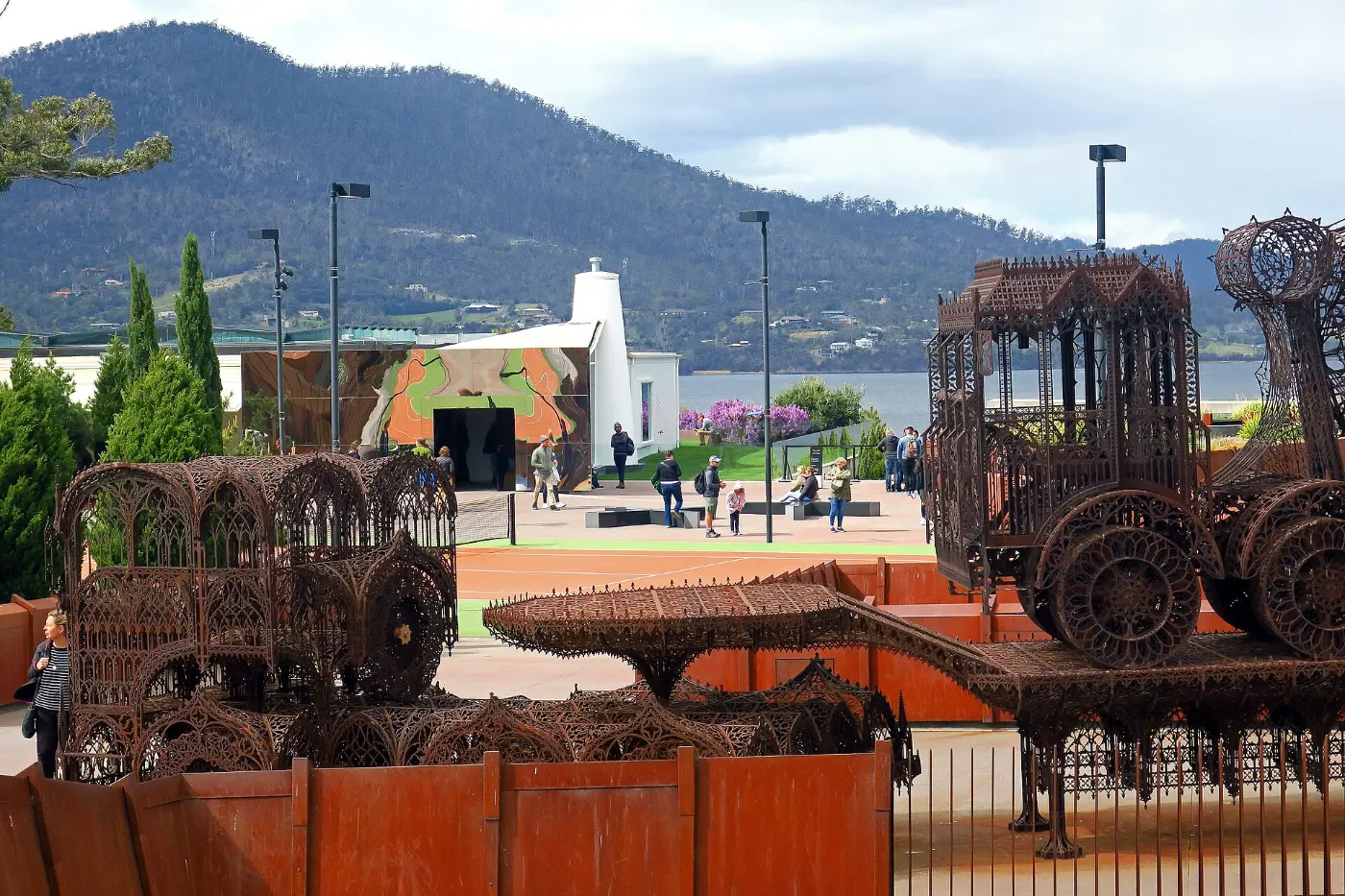 Photo: Tim J Keegan, CC BY-SA 2.0
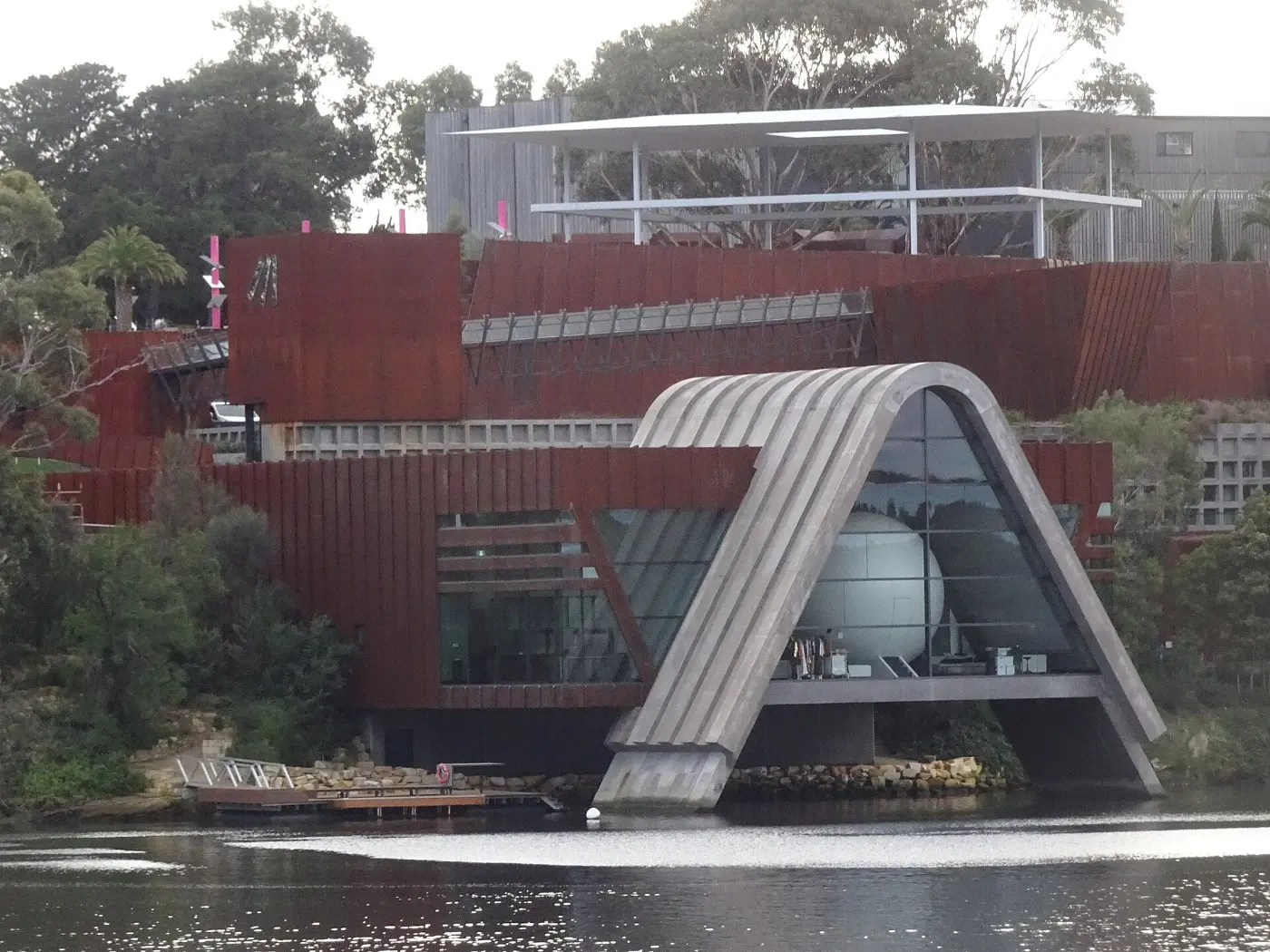 Photo: Michael Coghlan, CC BY-SA 2.0
Take the ferry to MONA
- WhereBerriedale, upriver from Hobart
- Getting there30-min ferry from Brooke Street Pier
- Time neededHalf to full day
The Museum of Old and New Art is the reason many people visit Tasmania. Owned by professional gambler David Walsh, it’s carved deep into a sandstone cliff on the River Derwent and is full of provocative, funny and occasionally confronting art. Even people who “don’t do museums” tend to love it.
The best way in is the MONA ferry from Brooke Street Pier on the Hobart waterfront. The camouflage-painted Mona Roma catamarans are part of the fun (some seats are shaped like sheep), and they take about 30 minutes each way, and fares start from about $30 (a return costs the same as one way). If you want to splash out, the Posh Pit lounge includes drinks and nibbles. The museum site also has the Moorilla winery and cellar door and restaurants, so it’s easy to fill a whole day. Even the lawns are playful: look for the laser-cut steel cement truck and the tennis court by the river.
MONA is generally open Thursday to Monday, 10am to 5pm. Museum entry is $39 for non-Tasmanian adults. Tasmanian residents get in free but still need to book a ticket.
Tip: MONA is usually closed on Tuesdays and Wednesdays, so plan it for a weekend. Book your timed museum entry and ferry together on the MONA website: the ferry ticket does not include museum entry.
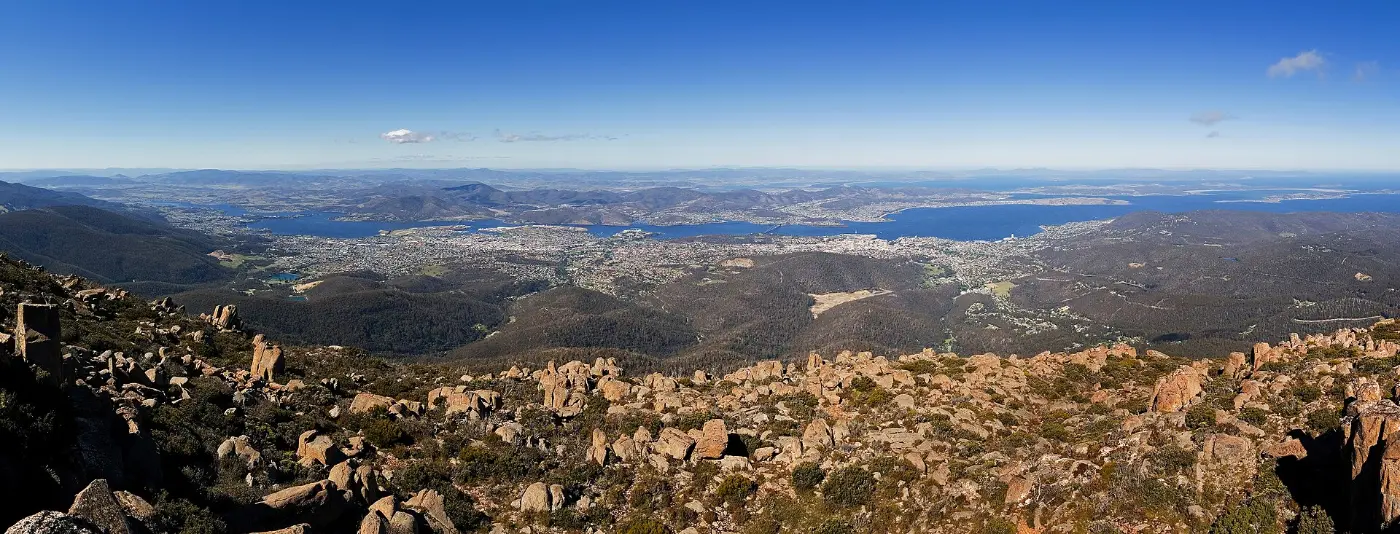 Photo: JJ Harrison, CC BY-SA 3.0
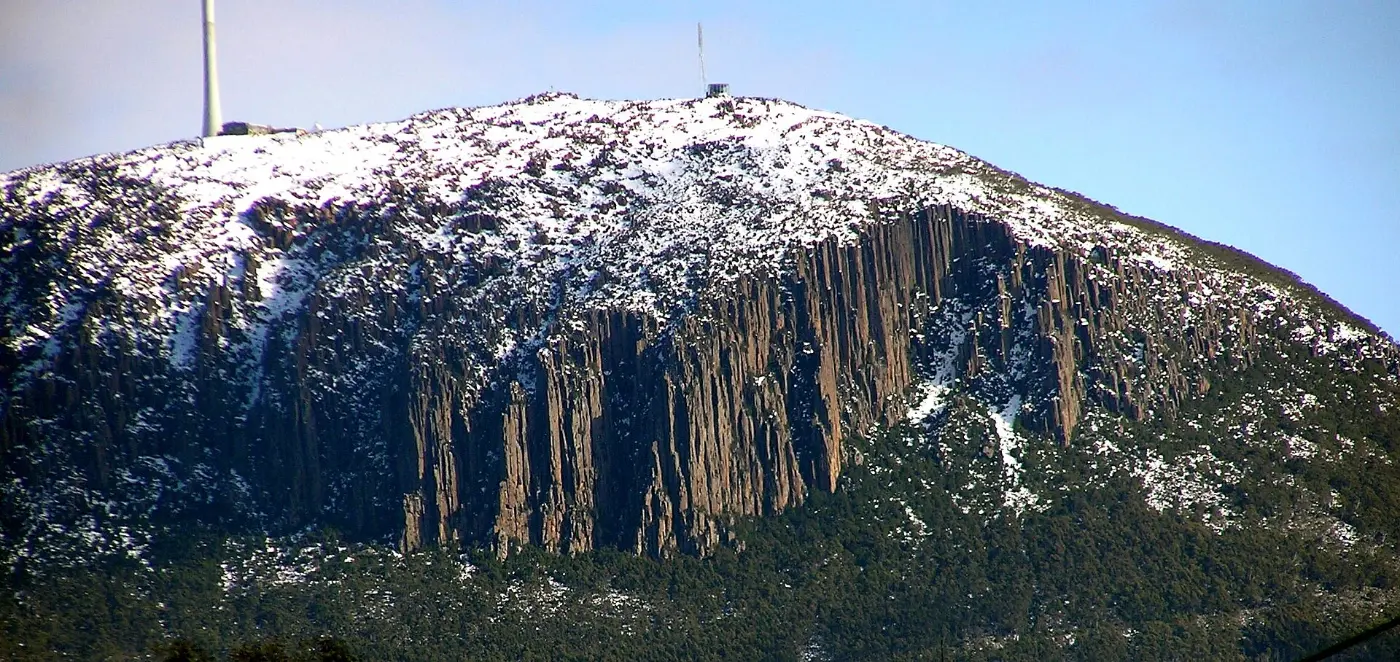 Photo: Graeme Bartlett, CC BY-SA 3.0
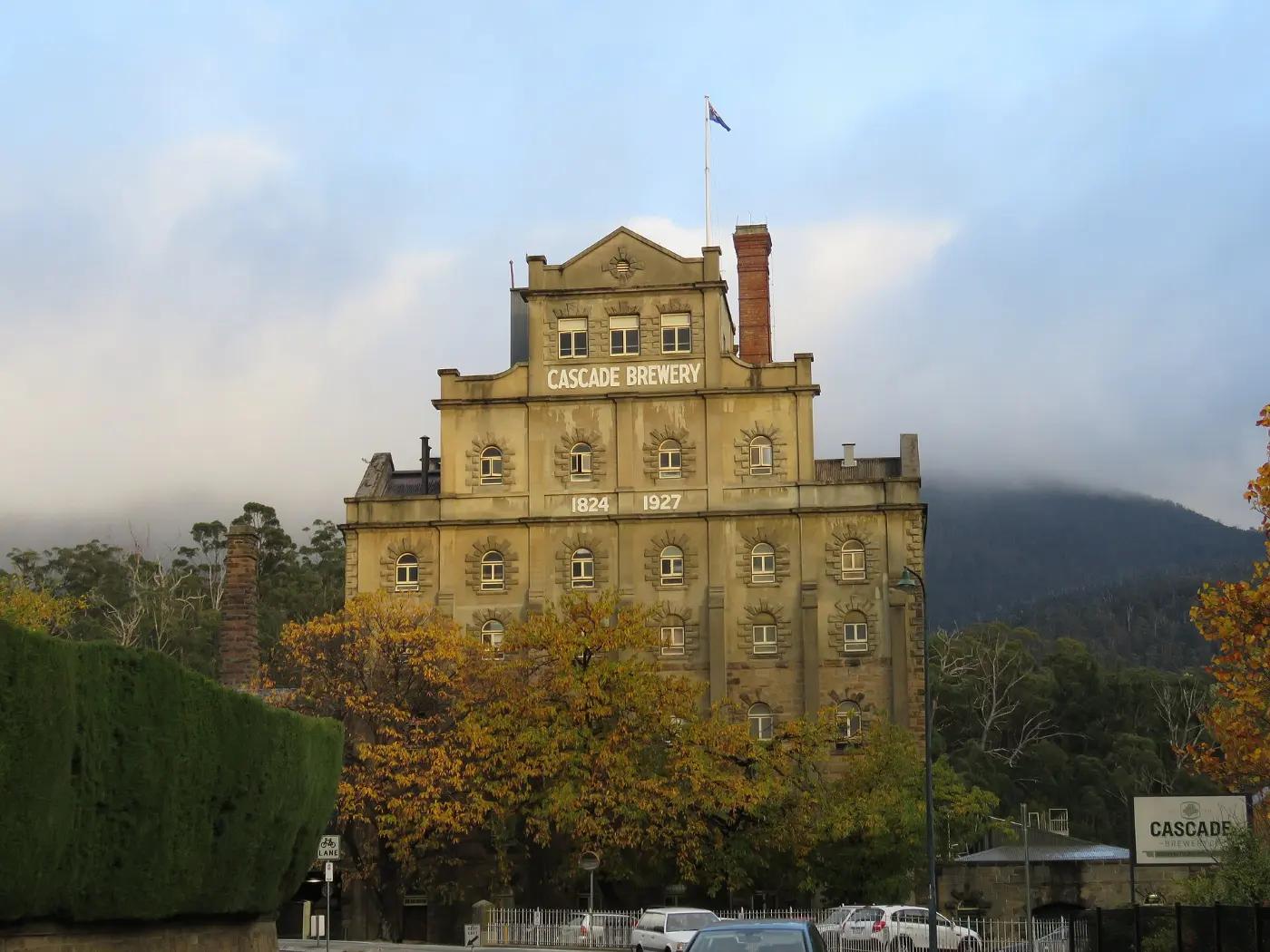 Photo: Rakesh Vyas, CC BY-SA 4.0
Look over Hobart from kunanyi / Mount Wellington
- Height1,271 m
- From HobartAbout 30 mins (21 km)
- Time needed1 hr to a full day
kunanyi / Mount Wellington towers over Hobart, and on a clear day the view from the summit takes in the city, the Derwent estuary, Bruny Island and the south-east coast. The 21 km drive up Pinnacle Road takes about 30 minutes from the CBD, and there’s a sheltered observation building at the top for windy days. No car? The kunanyi / Mt Wellington Explorer Bus runs to the summit from the city.
For walkers, The Springs is the hub: the Organ Pipes Track runs beneath the famous wall of dolerite columns, while the Zig Zag and Ice House tracks climb steeply to the top. Guided downhill mountain bike tours are also a popular way to come down.
At the foot of the mountain in South Hobart is the Cascade Brewery, Australia’s oldest operating brewery (founded in 1824), with tours and a garden bar that make a good end to the day.
Tip: It can be much colder and windier on top than in town, and Pinnacle Road closes when there’s snow or ice. Students: the summit is at 1,271 m, so don’t drive up soon after a dive. Check timing with your trainer.
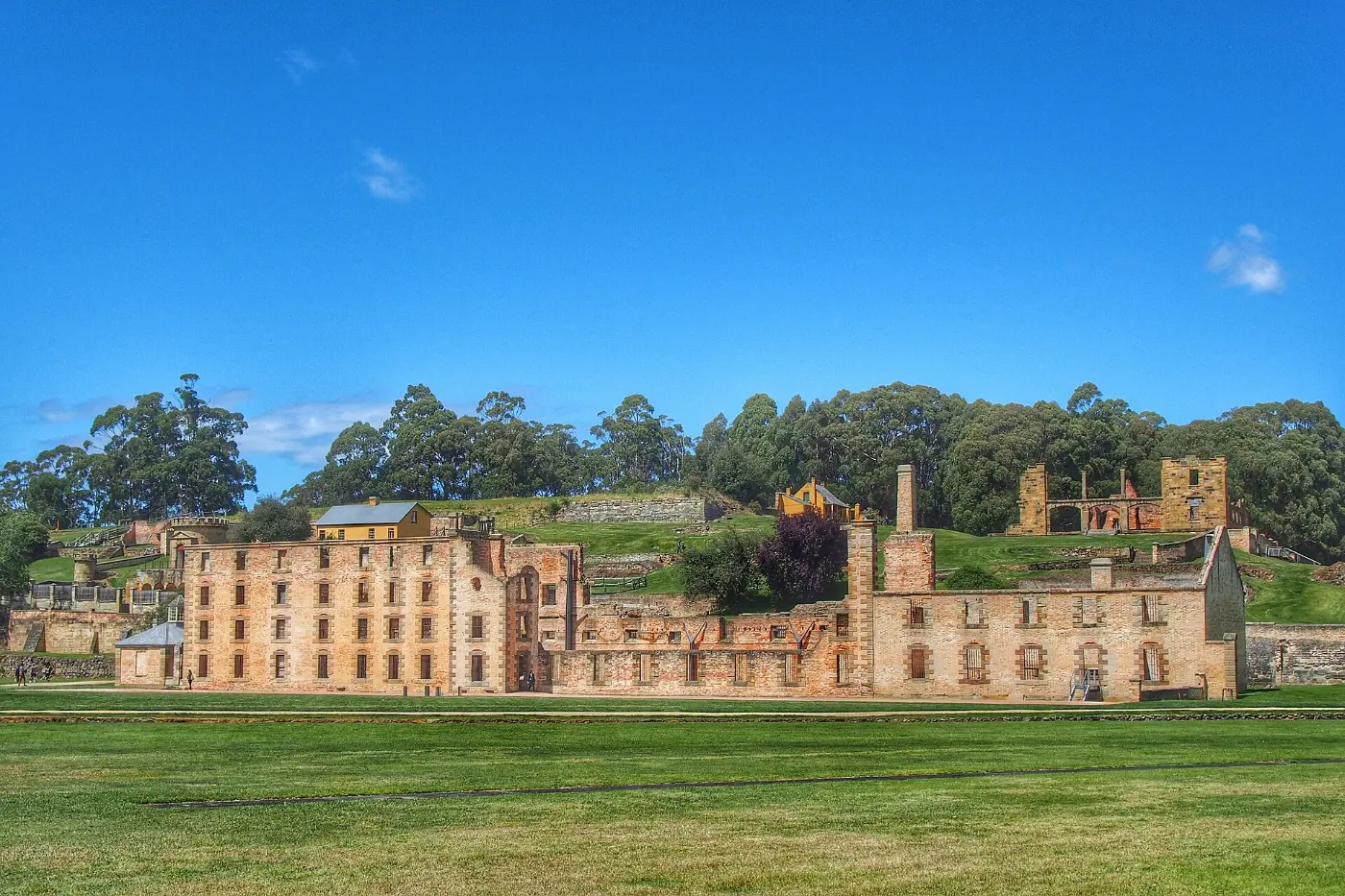 Photo: Colin Chick, CC BY-SA 4.0
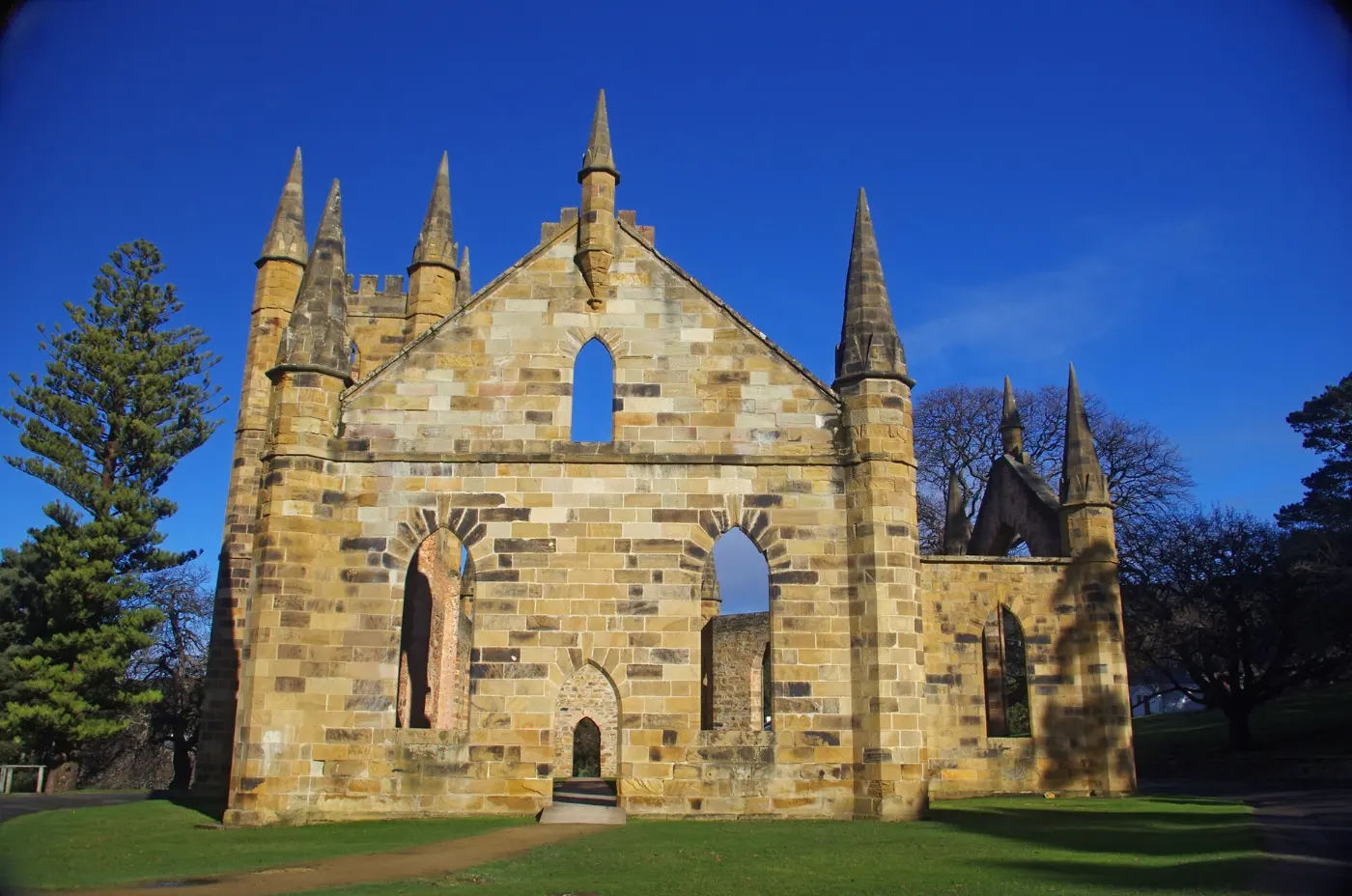 Photo: Karen Bevis, CC BY-SA 4.0
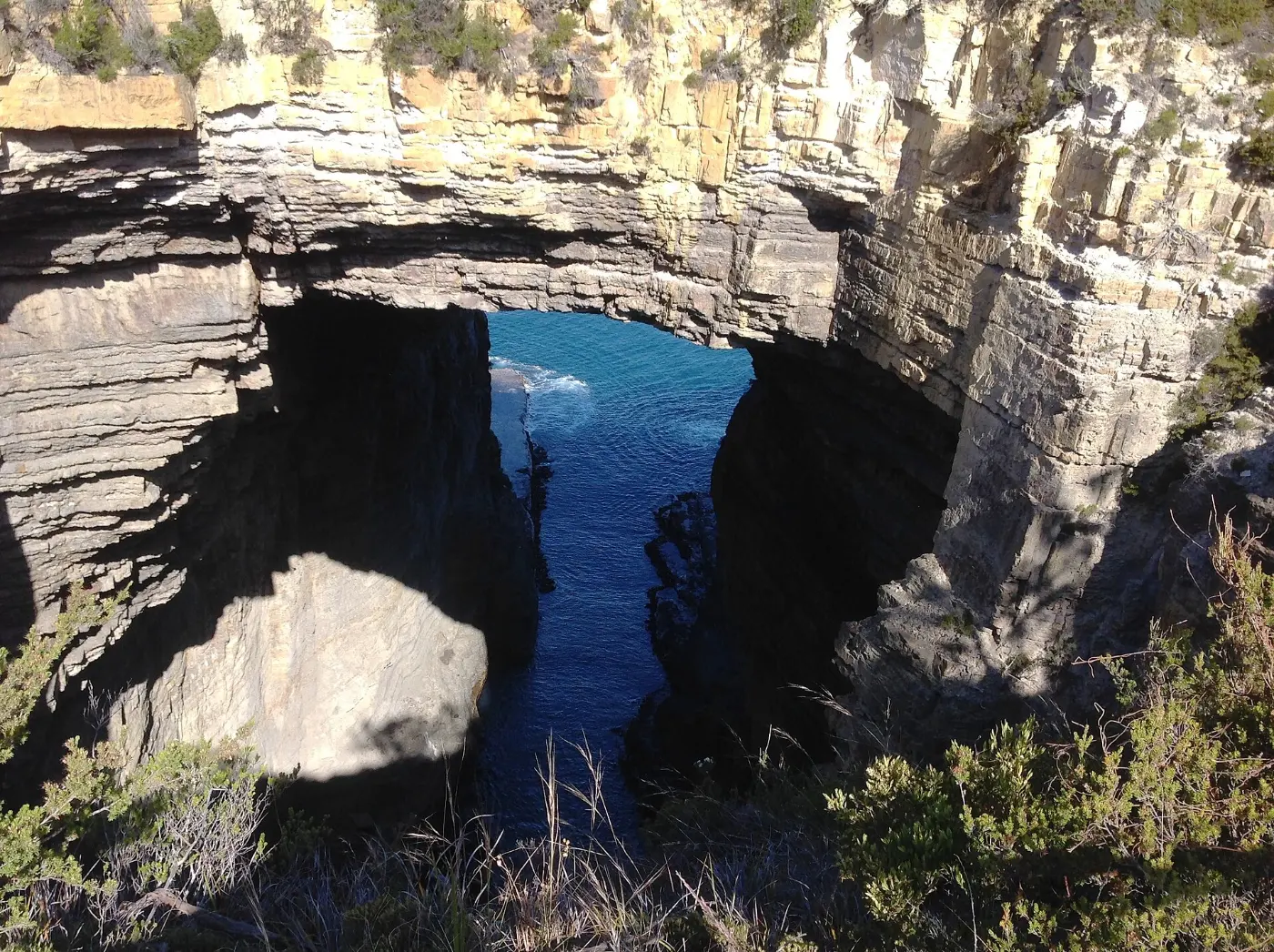 Photo: ElPhantomero, CC BY-SA 4.0
Port Arthur Historic Site and the Tasman Peninsula
- WhereTasman Peninsula
- From HobartAbout 90 mins
- Time neededHalf to full day, plus a night tour
Port Arthur is Australia’s best-known convict site and part of the UNESCO World Heritage-listed Australian Convict Sites. Between 1830 and 1877 it held thousands of convicts, and today the ruins of the Penitentiary, the Separate Prison, the church and dozens of other buildings sit in beautiful green grounds on the water.
An entry ticket covers general admission plus a complimentary 20-minute harbour cruise, and it’s valid for two consecutive days with access to more than 30 historic buildings, ruins and gardens. The site is open daily from 9am to 5pm. Most visitors spend between half a day and a full day here.
After dark, the Ghost Tour is a 90-minute, lantern-lit walk through the empty site. Tours run Wednesday to Sunday at around 6pm and 8pm, cost about $35 per adult and don’t need a separate day ticket. On the drive down, stop at Eaglehawk Neck for the Tessellated Pavement, Tasman Arch and the Devil’s Kitchen, and near Port Arthur for Remarkable Cave.
Tip: Stay a night on the peninsula. You can see the site by day, do the Ghost Tour at night and walk Cape Hauy from Fortescue Bay the next morning.
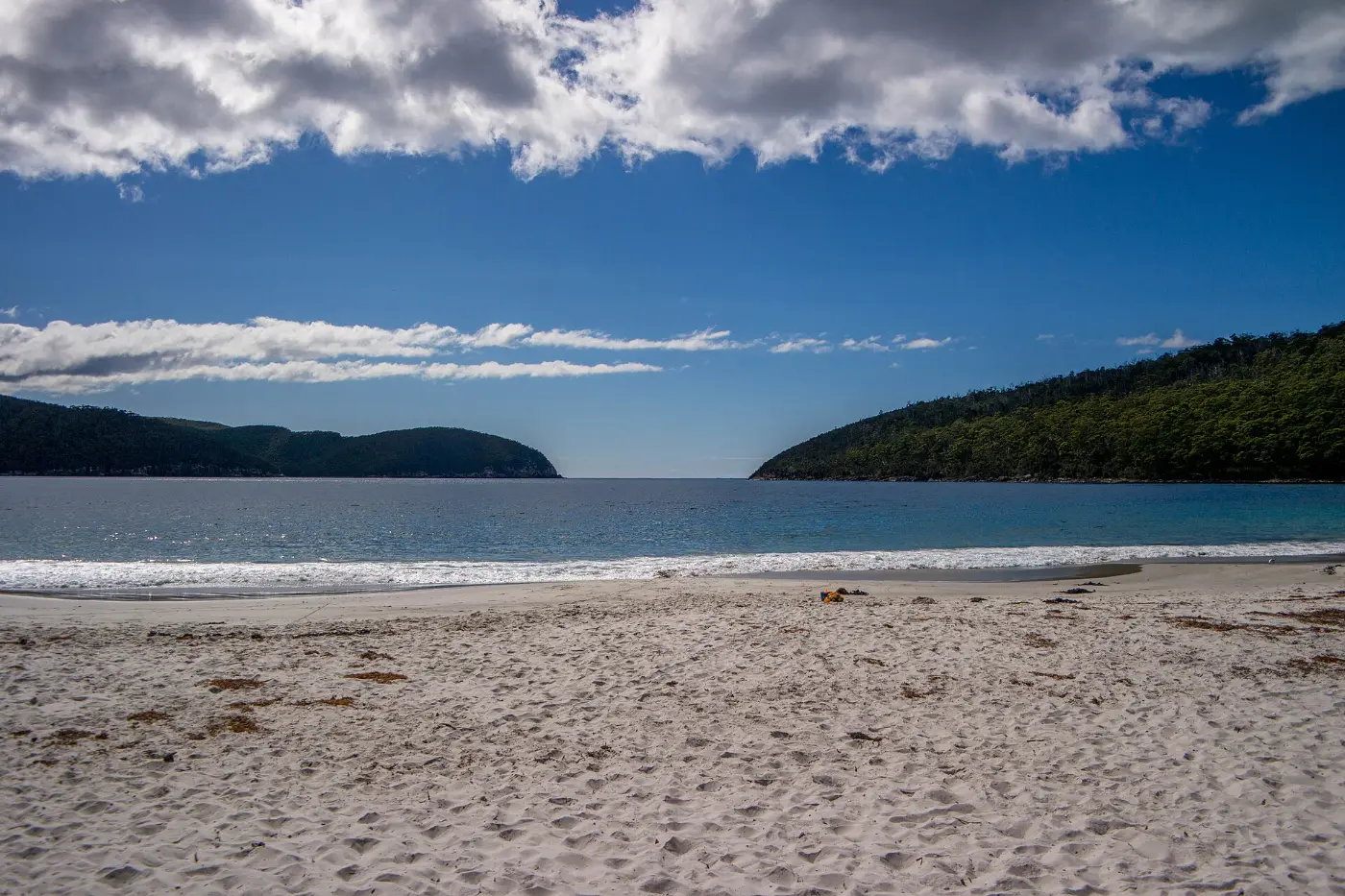 Photo: Ida Gjerlevsen Nielsen, CC BY-SA 4.0
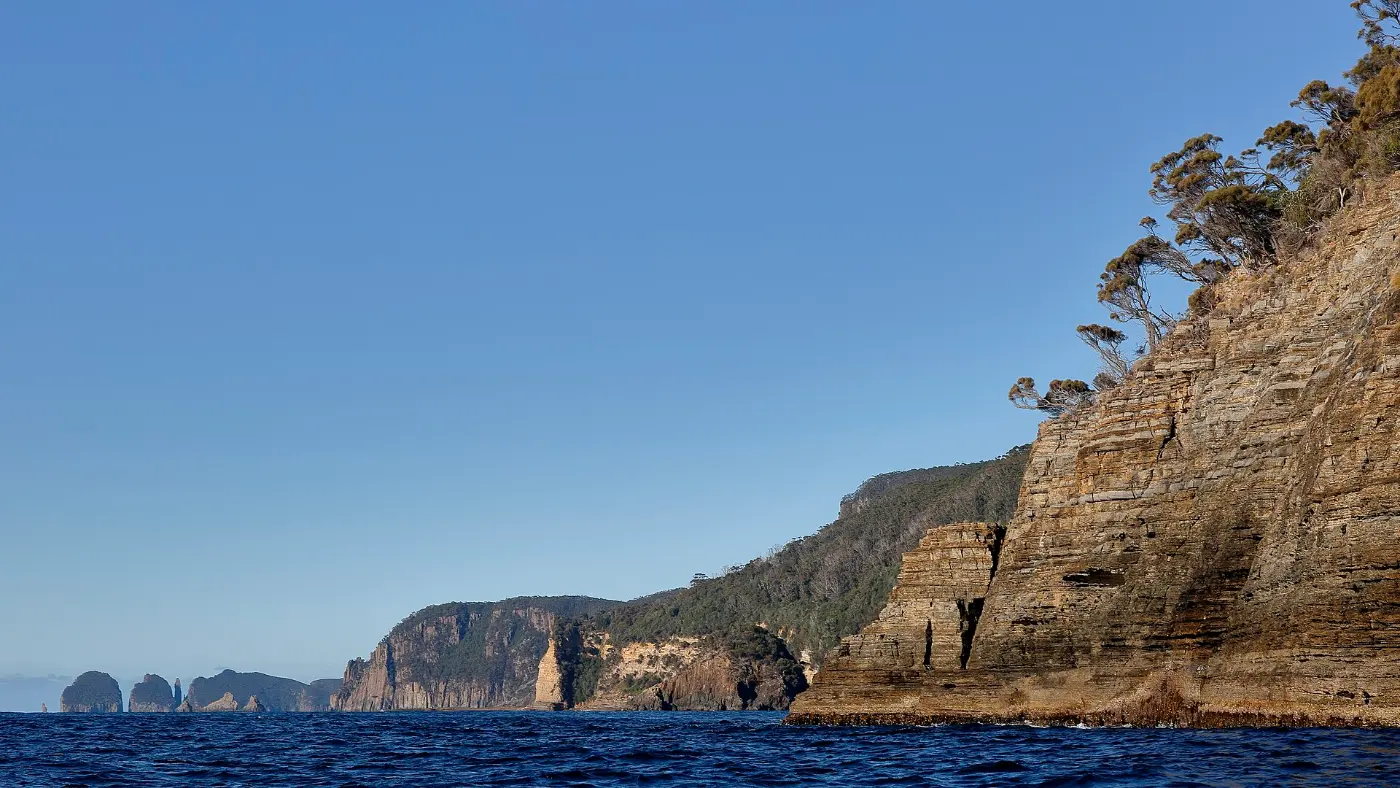
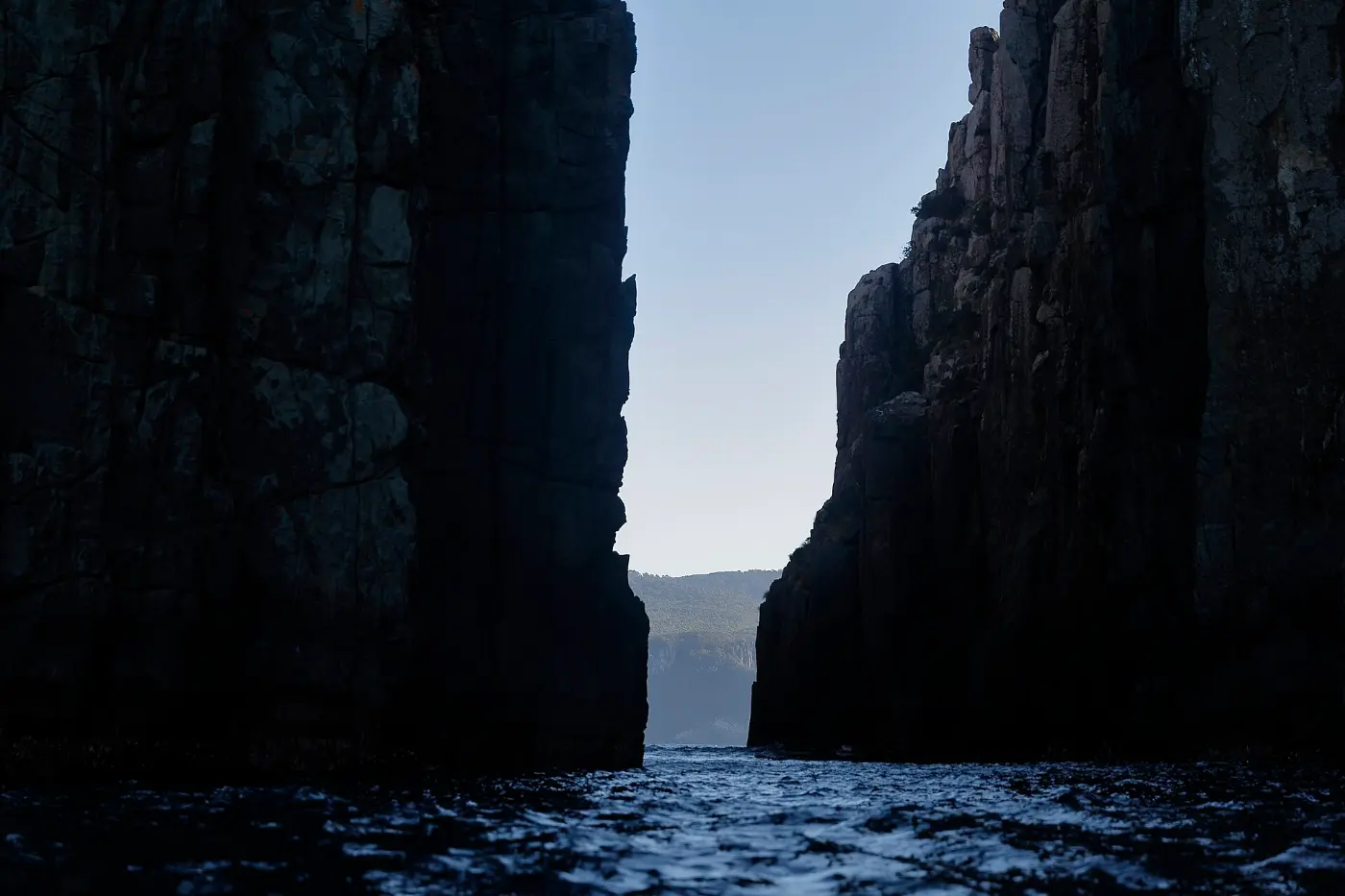
Fortescue Bay and the Cape Hauy walk
- WhereTasman National Park
- From Port ArthurAbout 30 mins (last 12 km gravel)
- Cape Hauy walk9.4 km return, about 4 hrs
Fortescue Bay is one of Tasmania’s most beautiful campgrounds: a golden arc of sand and clear, sheltered water backed by tall blue gums and stringybarks. It’s also where the Three Capes Track finishes, so it’s a great place to see the coastline even if you don’t have four days to spare.
The headline walk is Cape Hauy, one of Tasmania’s 60 Great Short Walks. The track starts near the boat ramp, follows the rocky shore and then climbs through heath and woodland to the cape, where sheer dolerite columns drop straight into the sea. It’s 9.4 km return, takes about 4 hours and is graded 3, with plenty of steps. For something gentler, stroll the beach to Canoe Bay, or take the 10 km return coastal walk to Bivouac Bay.
On a calm day the water is good for a swim or a snorkel (it’s cold, so bring a wetsuit). Campsites and toilets are available at the bay, and the turn-off is on the main road just past Taranna.
Tip: You’ll need a national parks pass. Cape Hauy is exposed and has unfenced cliff edges, so stay on the track, carry water and check the weather before you go.
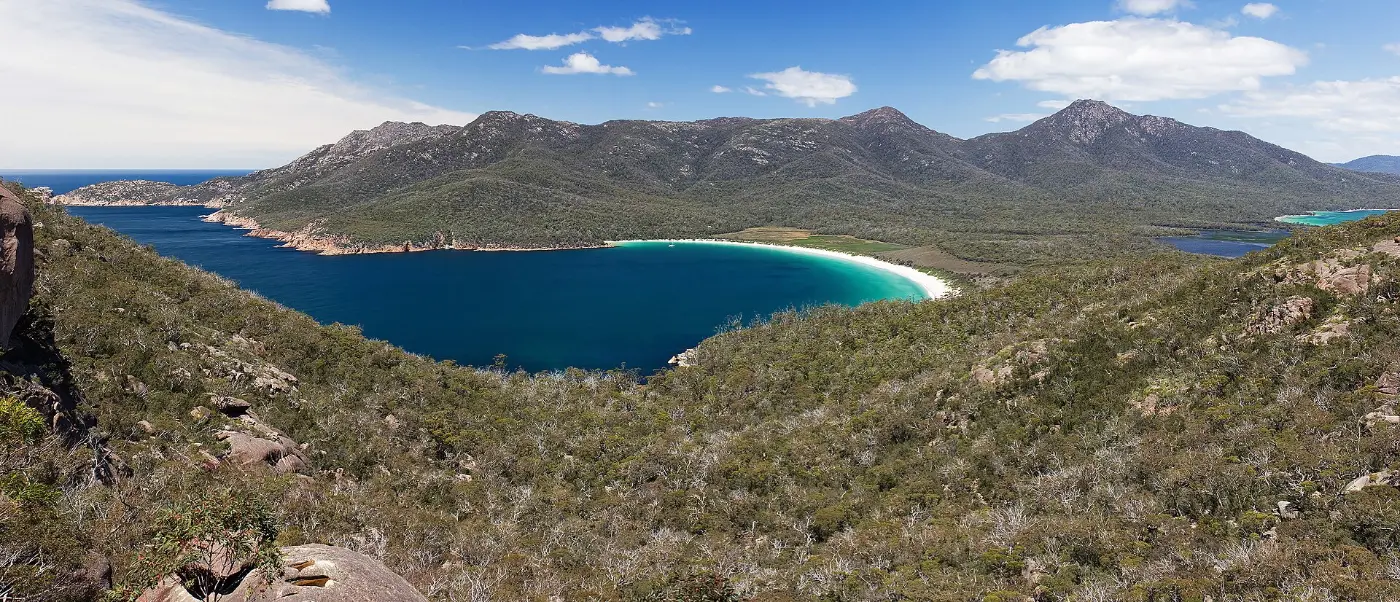 Photo: JJ Harrison, CC BY-SA 3.0
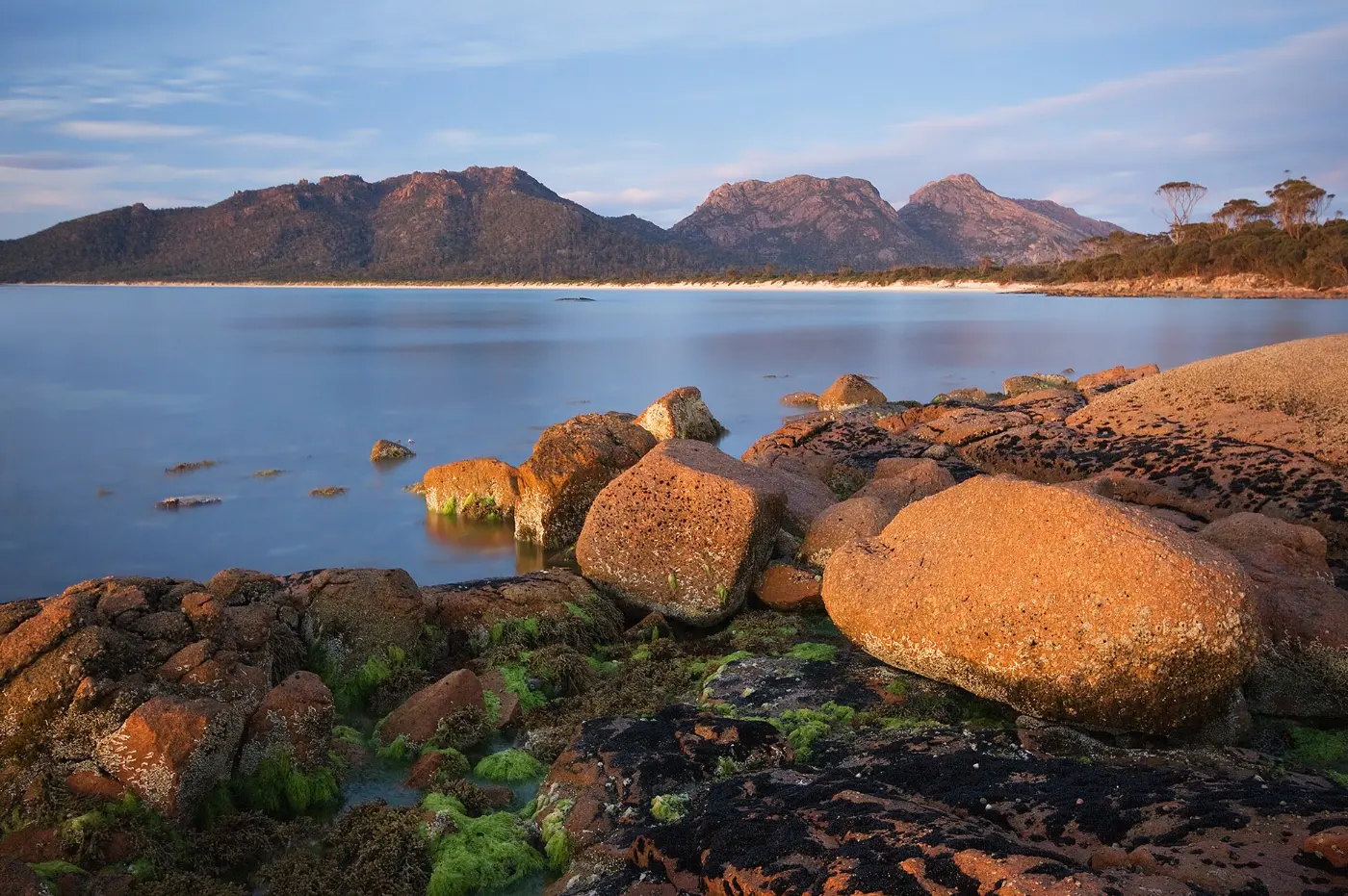 Photo: JJ Harrison, CC BY-SA 3.0
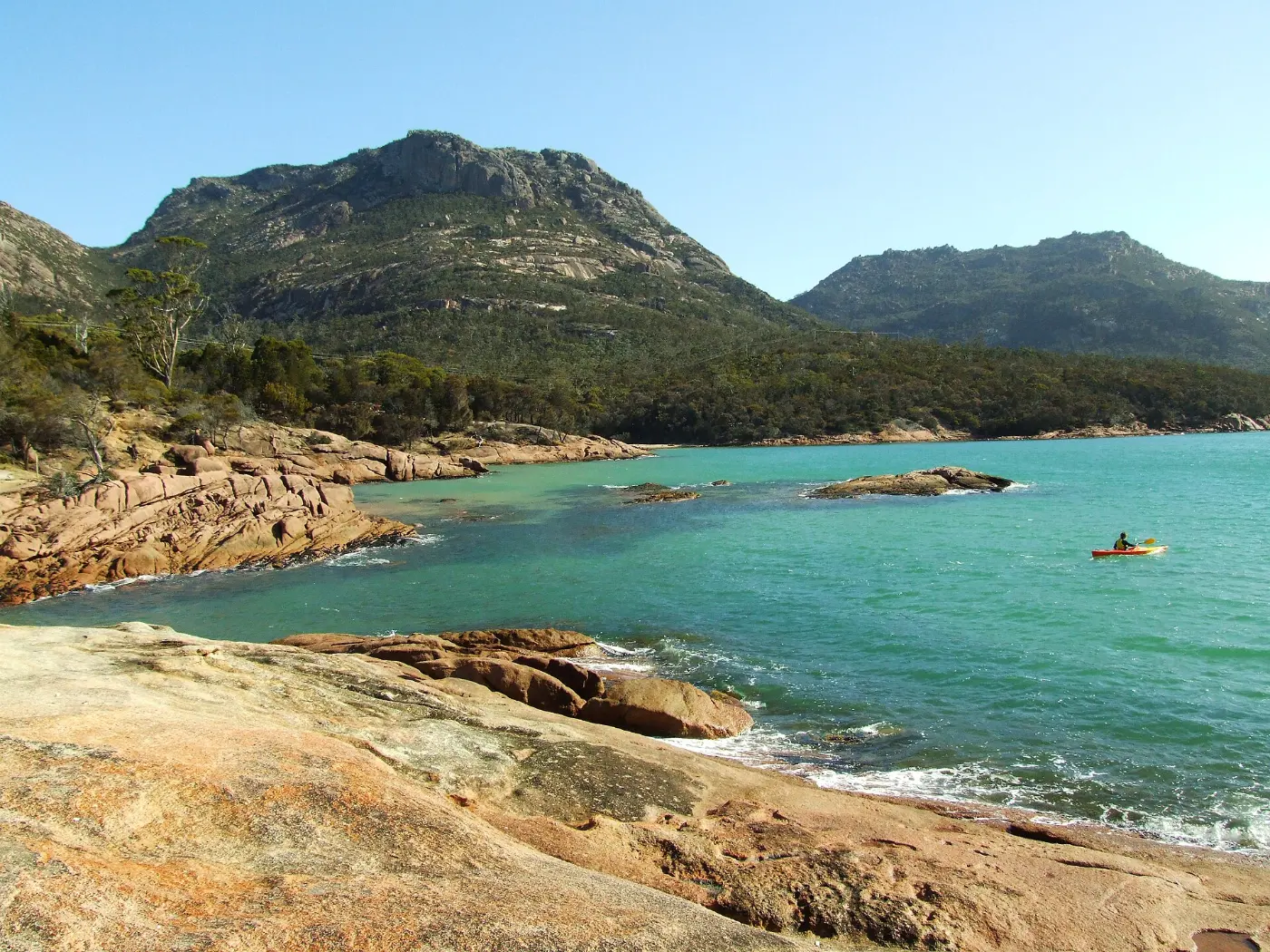 Photo: Wj32, CC BY-SA 3.0
Freycinet National Park and Wineglass Bay
- WhereColes Bay, east coast
- From LauncestonAbout 2.5 hrs
- Time neededFull day or a weekend
The pink granite peaks of the Hazards and the perfect curve of Wineglass Bay make Freycinet one of Australia’s most photographed national parks, and it’s an easy weekend from either of our northern sites.
- Wineglass Bay Lookout: 2.6 km return, about 1 to 1.5 hours, with a steady climb to the classic view.
- Wineglass Bay beach: keep going down the other side for 6 km return, about 2.5 to 3.5 hours.
- Cape Tourville: a flat 20-minute boardwalk loop around a lighthouse with huge coastal views. Great for anyone who doesn’t want a big walk.
- Freycinet Peninsula Circuit: a 30 km, three-day overnight hike for keen walkers.
If walking isn’t your thing, Wineglass Bay Cruises runs a 4.5-hour cruise from Coles Bay to Wineglass Bay every day except Christmas Day, departing 9.45am. Dolphins, seals and (in season) whales are common, and you see beaches you can only reach by water. Finish with fresh oysters at Freycinet Marine Farm on the road back out of Coles Bay.
Tip: Get to the lookout car park early in summer, as it fills by mid-morning. A national parks pass is required.
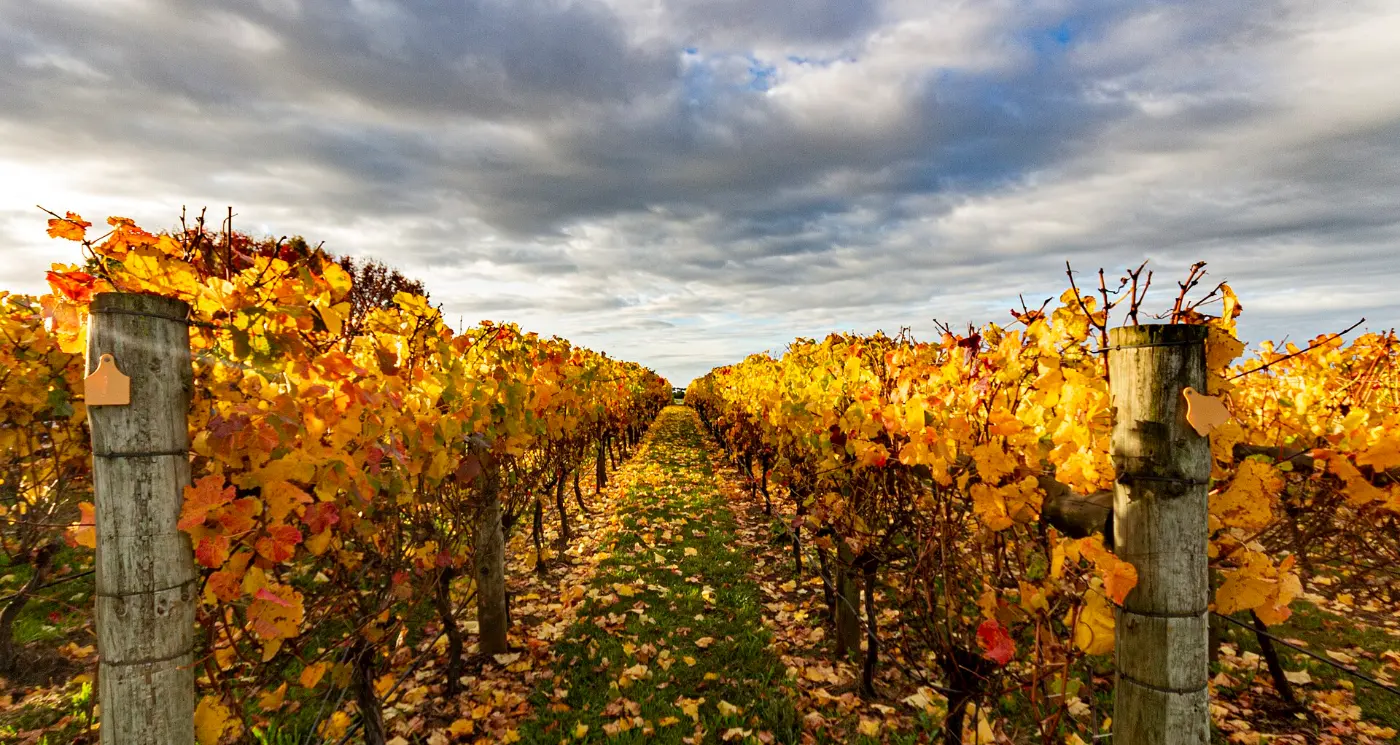 Photo: Steven Penton, CC BY 2.0
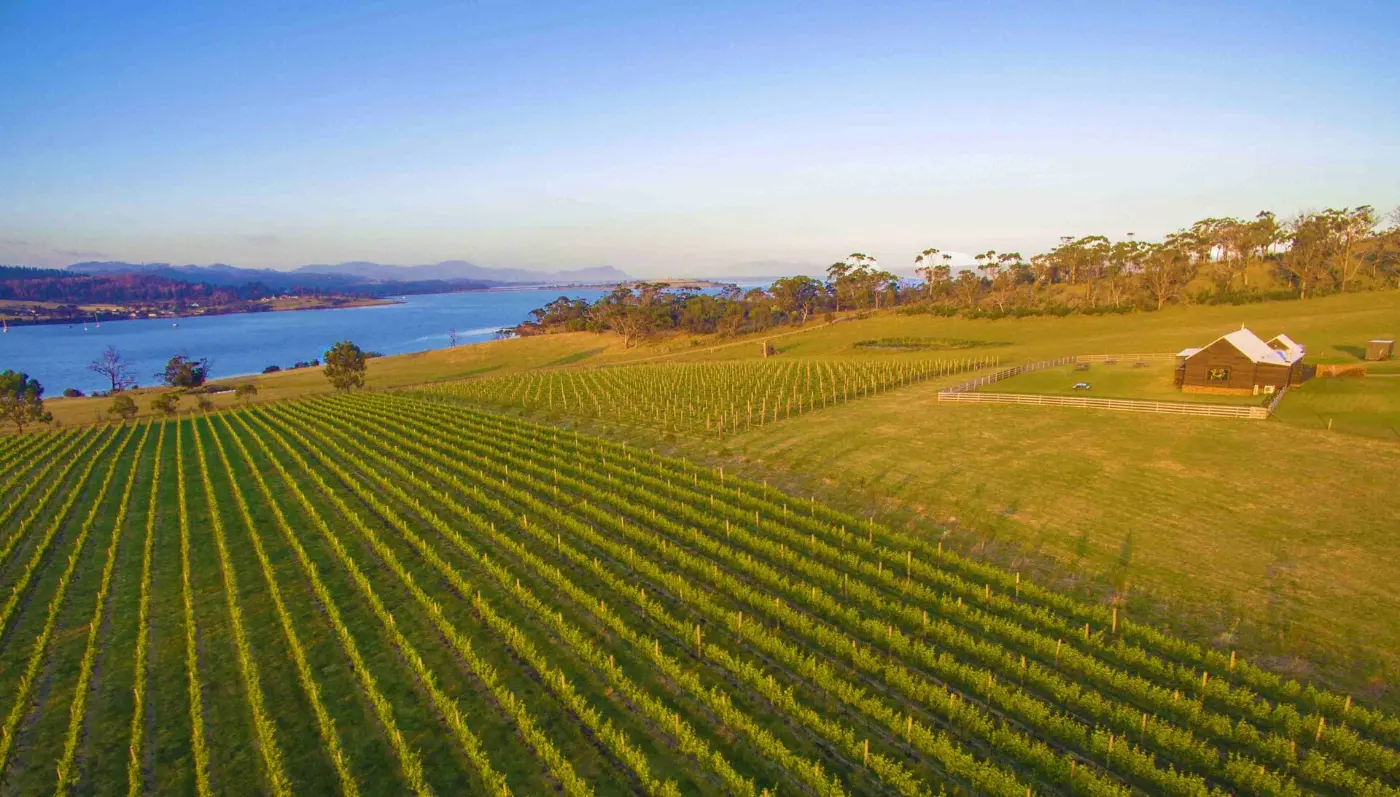 Photo: Bangor Vineyard Shed, CC BY 2.0
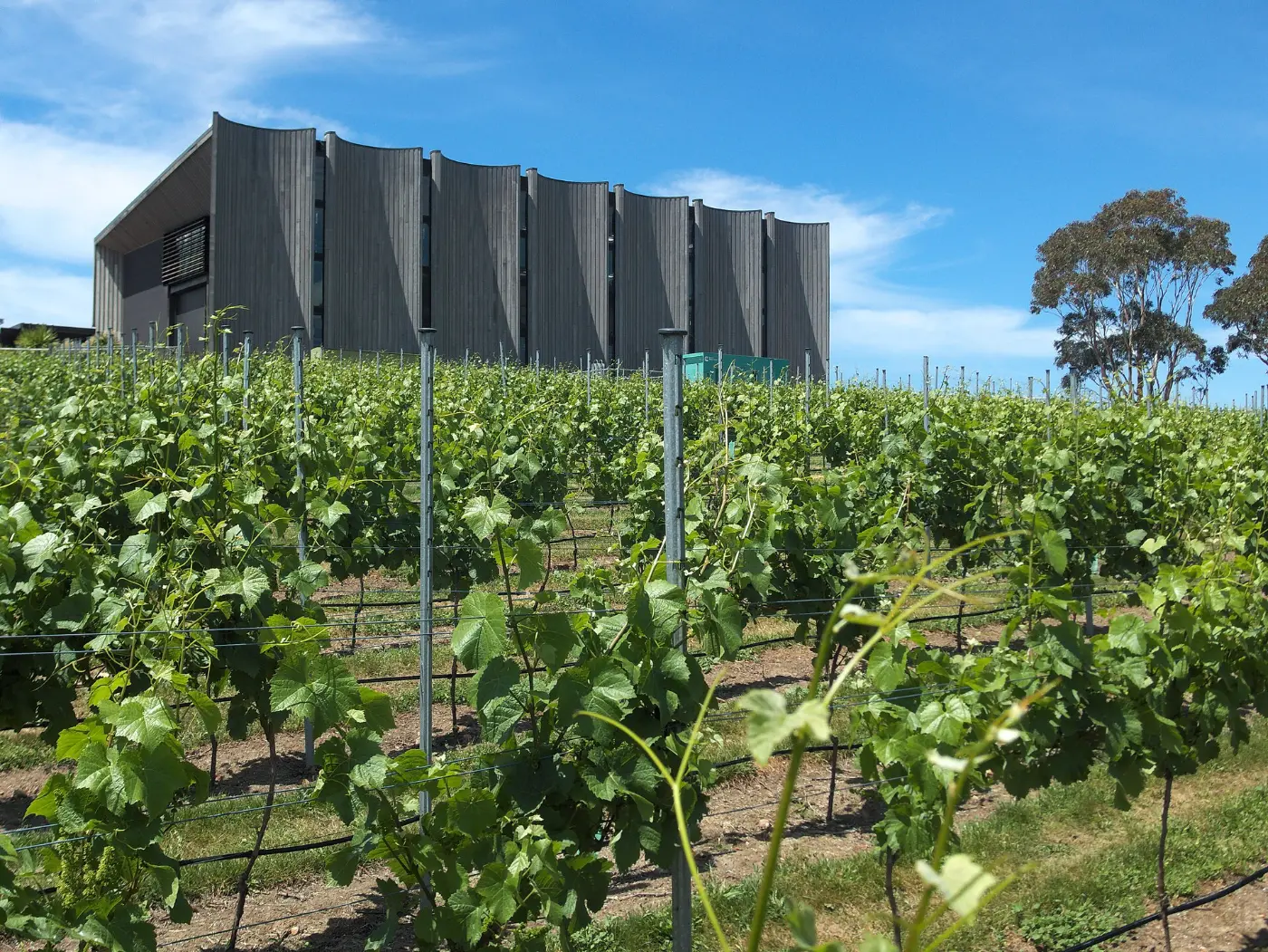 Photo: Gary Houston, CC0
Wineries: Coal River Valley and the East Coast
- Near HobartCoal River Valley, about 25 mins
- East coastWine trail from Orford to St Helens
- Known forSparkling and pinot noir
Tasmania’s cool climate produces some of Australia’s best sparkling wine and pinot noir. We’ve already covered the Tamar Valley Wine Route near Beauty Point, so here are the two regions to add when you head south and east.
Coal River Valley. Just past Hobart Airport, around the Georgian village of Richmond, this is Hobart’s closest wine region. Cellar doors such as Frogmore Creek, Puddleduck and Pooley Wines are all within a short drive of each other, and convict-built Richmond Bridge (1820s) is the oldest bridge still in use in Australia. Closer to the city, Moorilla at MONA has its own vineyard and cellar door.
East Coast Wine Trail. Stretching up the coast from Orford past Swansea and Freycinet, this trail is perfect to combine with a Freycinet weekend. Don’t miss Devil’s Corner near Apslawn: climb the timber lookout tower for views over Moulting Lagoon to the Hazards, then grab oysters, pizza or fish and chips from the food stalls. It’s open 10am to 5pm daily. Spring Vale and Freycinet Vineyard are close by.
Training at Lake Cethana? Ghost Rock Vineyard near Port Sorell (pictured above) is an easy drive from Sheffield.
Tip: Pick a designated driver or book a small-group wine tour from Hobart. Smaller cellar doors often have reduced winter hours, so check before you go.
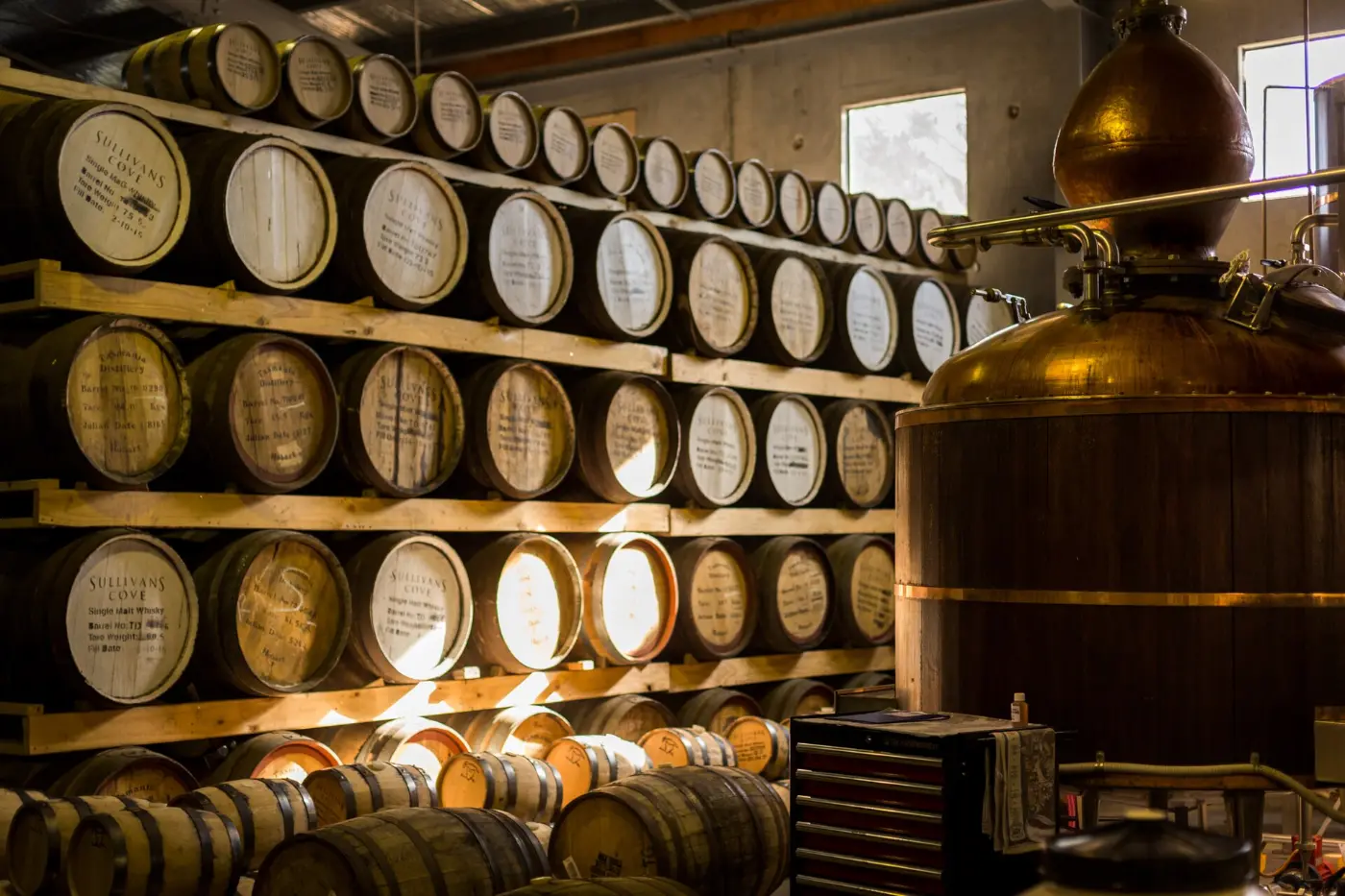
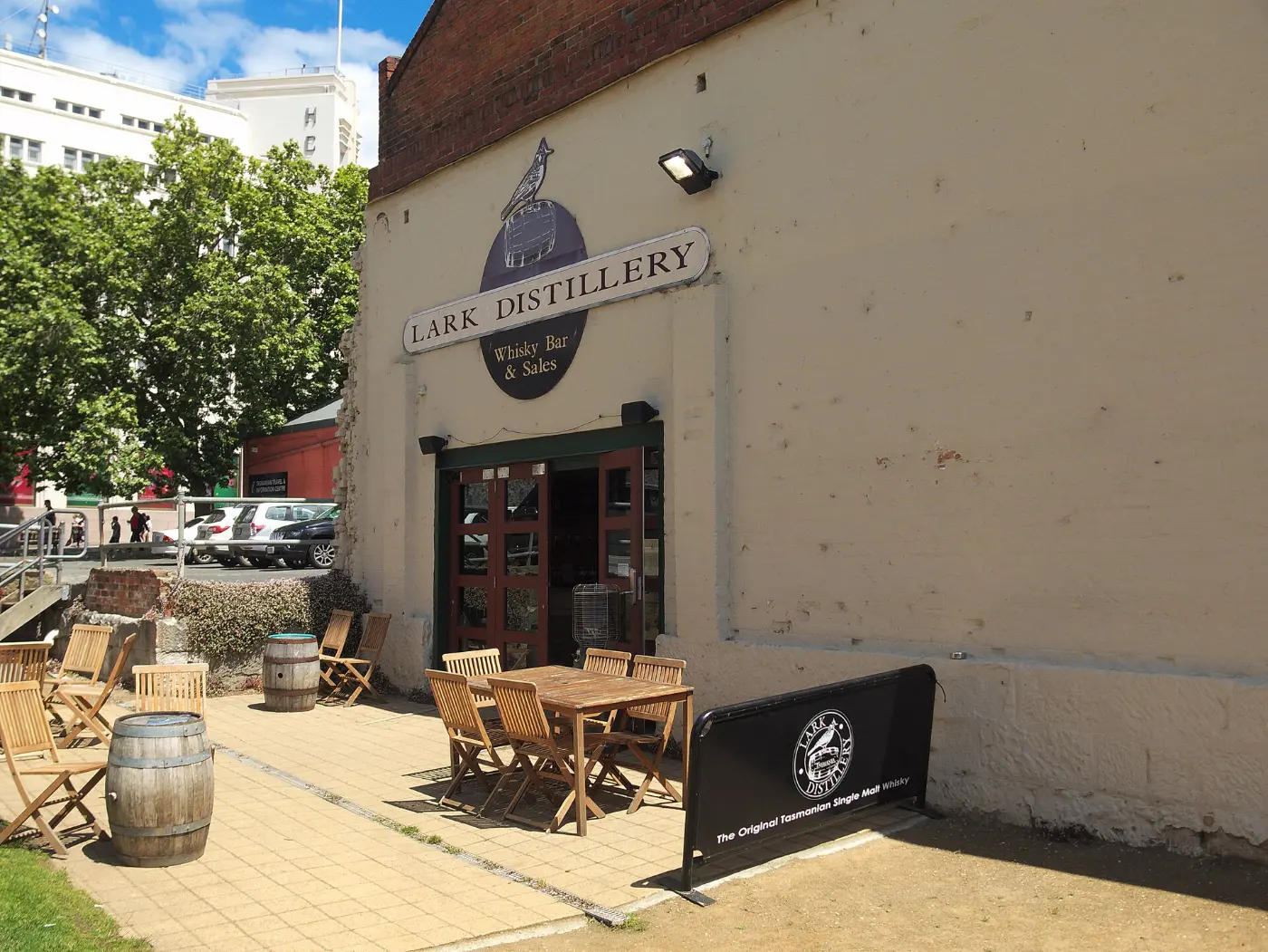 Photo: Gary Houston, CC0
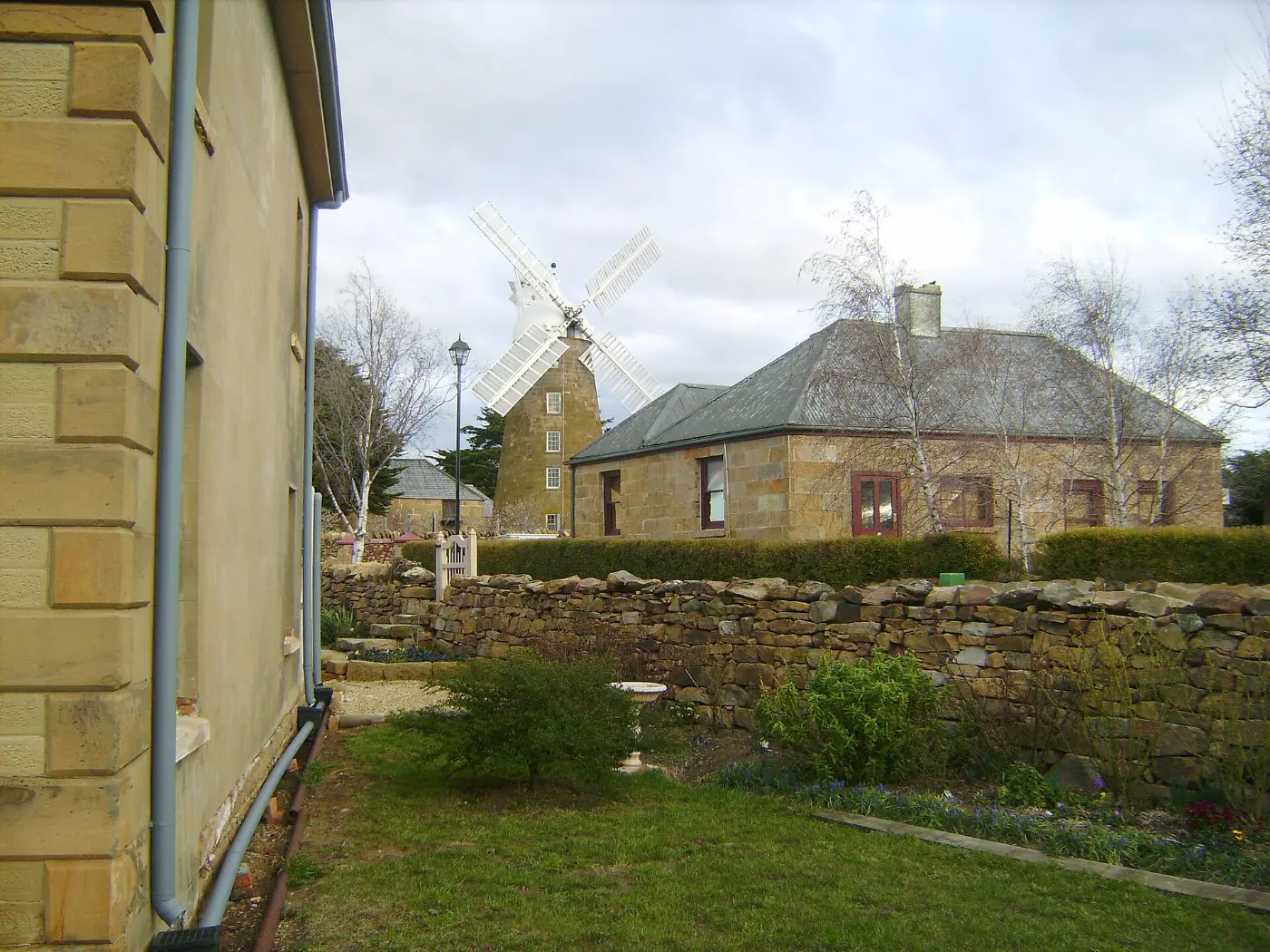 Photo: A wisper in the storm, Public domain
Tasmanian whisky and gin
- DistilleriesMore than 70 statewide
- StartHobart waterfront
- TrySingle malt and pepperberry gin
Tasmania has become one of the world’s most talked-about whisky regions. It began in 1992, when Bill Lark set up the island’s first licensed distillery since colonial times. Today there are more than 70 distilleries across the state, many of them also making gin with native botanicals such as Tasmanian pepperberry.
- Lark Cellar Door, 14 Davey Street on the Hobart waterfront: tastings of Lark whisky, Forty Spotted gin and Quiet Cannon rum. Lark’s bar The Still on Argyle Street showcases whisky from distilleries all over Tasmania.
- Sullivans Cove, Cambridge (about 20 mins from the city, near the airport): its French Oak Cask was named the world’s best single malt at the 2014 World Whiskies Awards. Tours and tastings run at the cellar door; book ahead.
- Lark Distillery Pontville, about 35 mins north of Hobart: the production home of Lark, where you can taste the range and even blend your own whisky or gin.
- Callington Mill Distillery, Oatlands: a striking modern distillery beside an 1837 windmill, right on the Midland Highway about halfway between Launceston and Hobart. It’s the perfect stop on a drive south, with self-guided tours and a restaurant.
- On the road: Spring Bay Distillery at Spring Beach (near the Maria Island ferry), McHenry Distillery on the Tasman Peninsula, and Hellyers Road in Burnie, an easy trip from our Lake Cethana base.
Tip: Many smaller distilleries open by appointment only, so book ahead. Discover Tasmania’s Whisky Trail maps more than 30 that welcome visitors.
 Photo: JJ Harrison, CC BY-SA 2.5
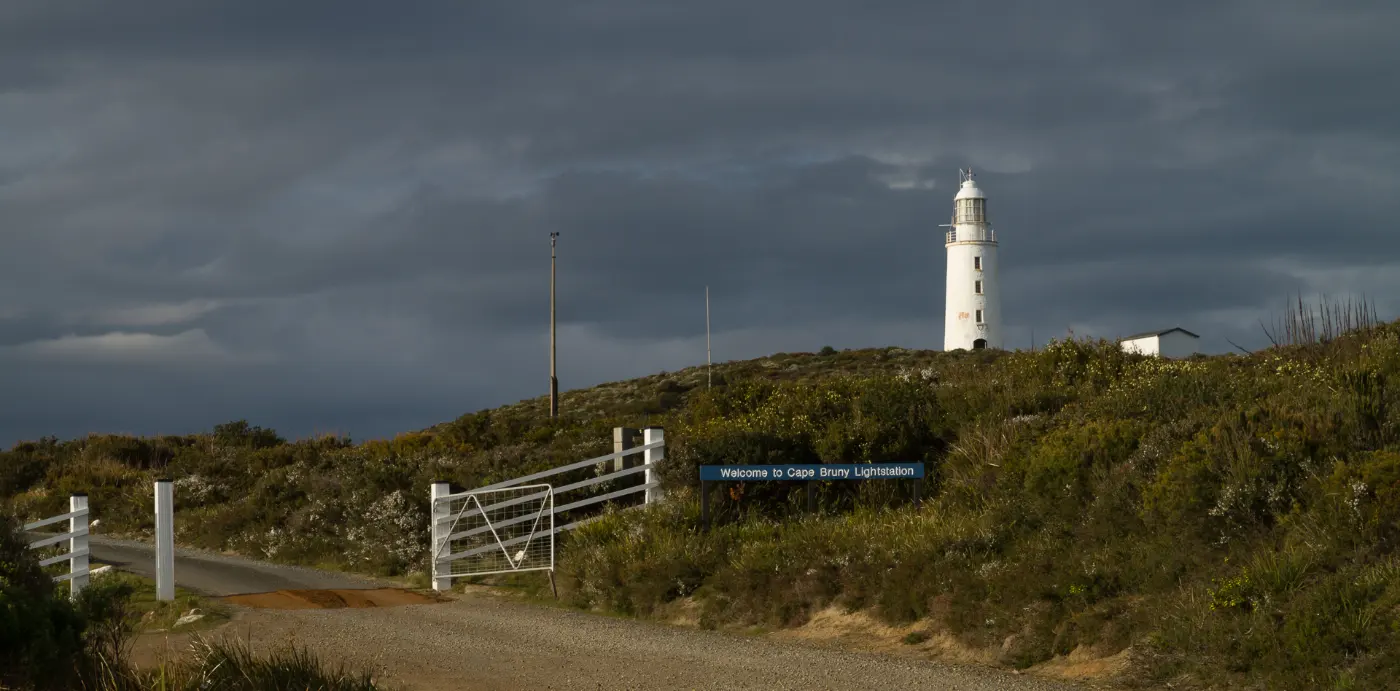 Photo: Stephen Edmonds, CC BY-SA 3.0
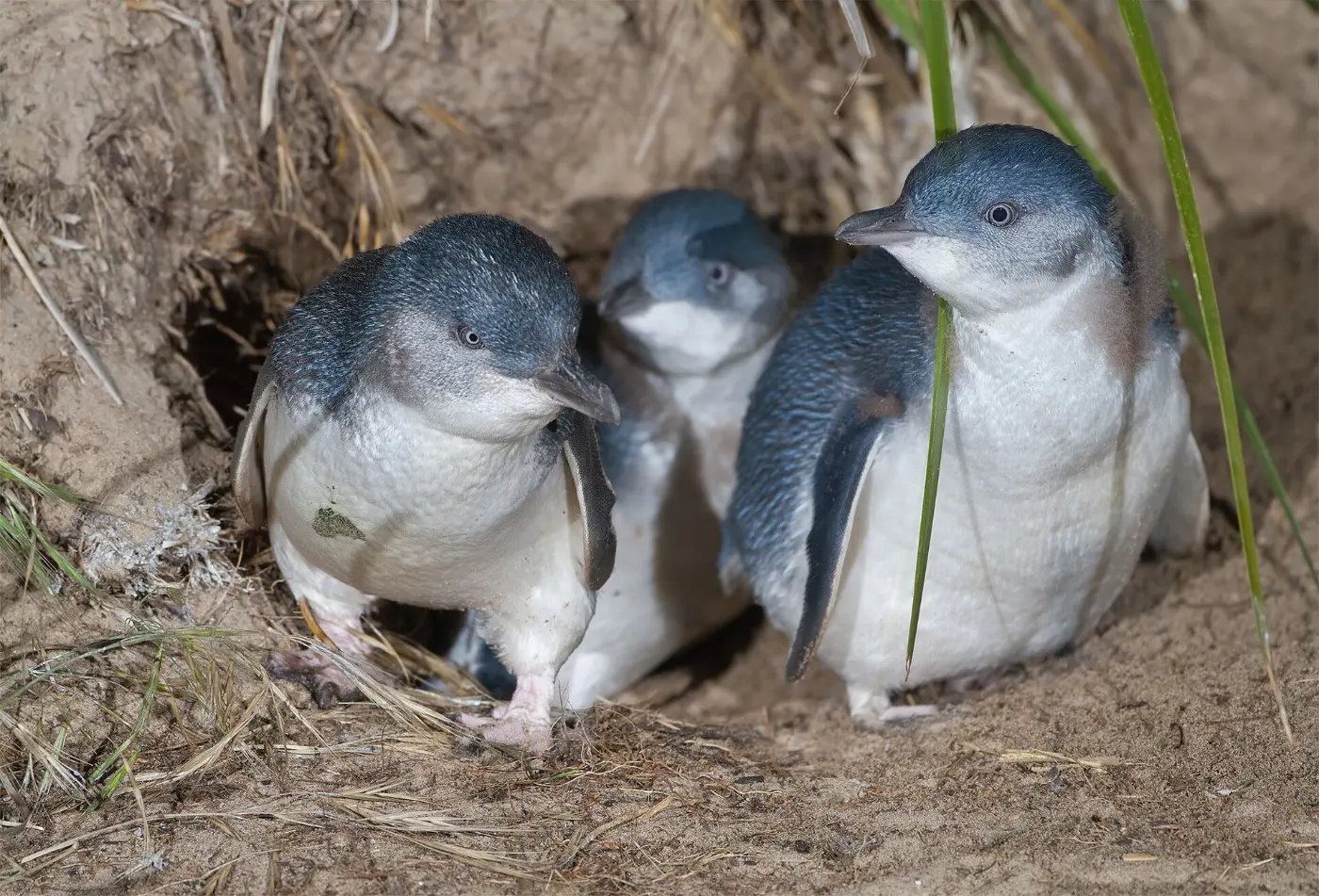 Photo: JJ Harrison, CC BY-SA 3.0
Bruny Island: oysters, cheese and The Neck
- Getting there20-min car ferry from Kettering
- From HobartAbout 30 mins to the ferry
- Time neededFull day (start early)
Bruny Island is really two islands, North and South Bruny, joined by a narrow sandy isthmus called The Neck. Climb the timber steps to Truganini Lookout for the island’s most famous view, with ocean on one side and the D’Entrecasteaux Channel on the other. The lookout is also a memorial to the Nuenonne people, Bruny’s original inhabitants.
Bruny is a food lover’s day out. Heading south from the ferry you pass Get Shucked (with the world’s first oyster drive-through window) and the Bruny Island Cheese and Beer Co, then there’s honey, fudge, chocolate, berries and whisky to taste along the way. On South Bruny, drive to Cape Bruny Lighthouse, swim at Adventure Bay, walk the Fluted Cape track, and keep an eye out for the island’s rare white wallabies.
At dusk, little penguins come ashore at The Neck. For the sea cliffs, seals and seabirds, Pennicott’s three-hour Bruny Island wilderness cruise leaves from Adventure Bay.
Tip: Catch an early ferry with SeaLink from Kettering, as queues build in summer. Fill up before you cross, as there’s only one petrol station on the island. If you stay for the penguins, keep to the viewing platform and don’t use torches or flash.
SeaLink Bruny Island ferry ↗Bruny Island, Discover Tasmania ↗
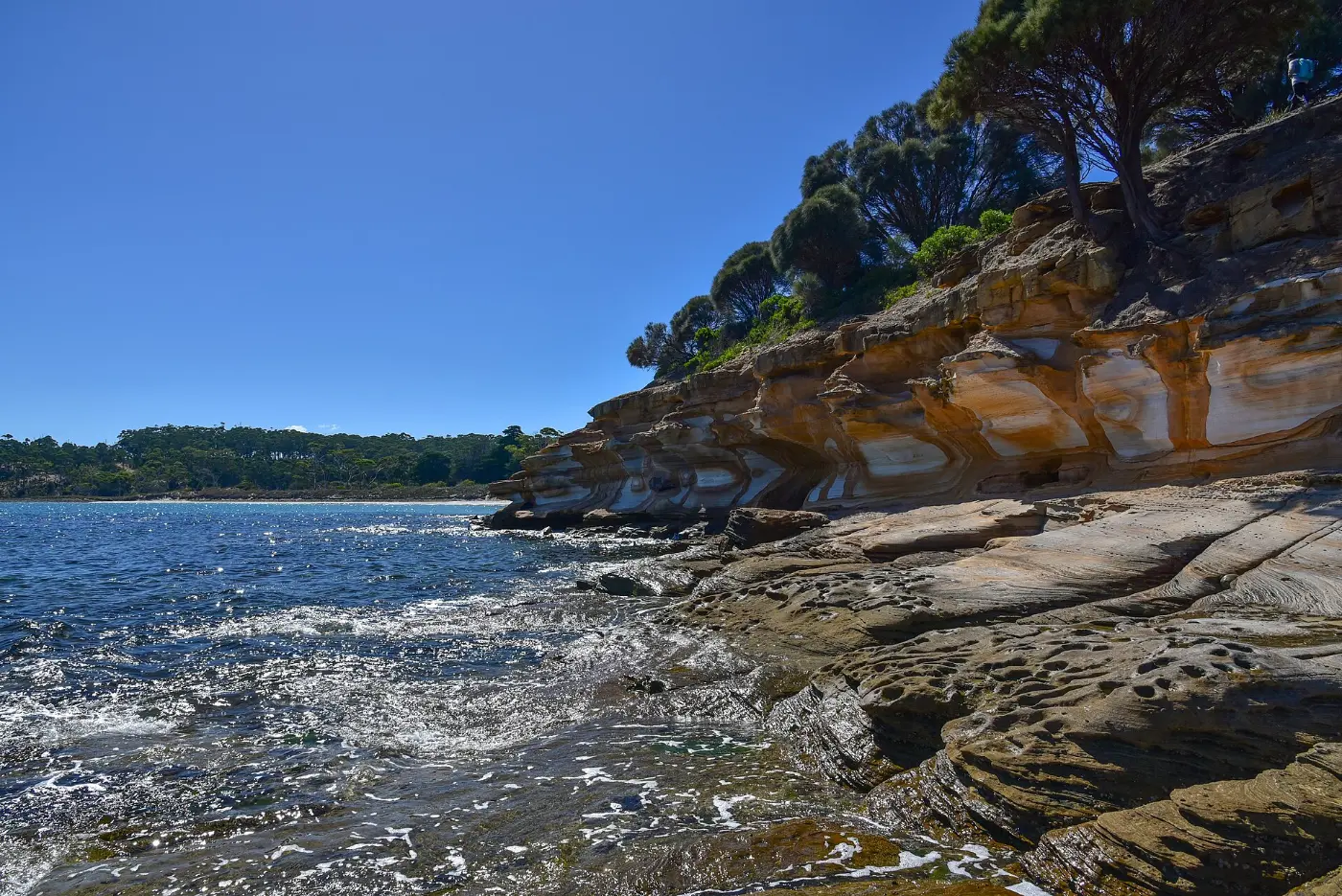 Photo: Ena Music, CC BY-SA 4.0
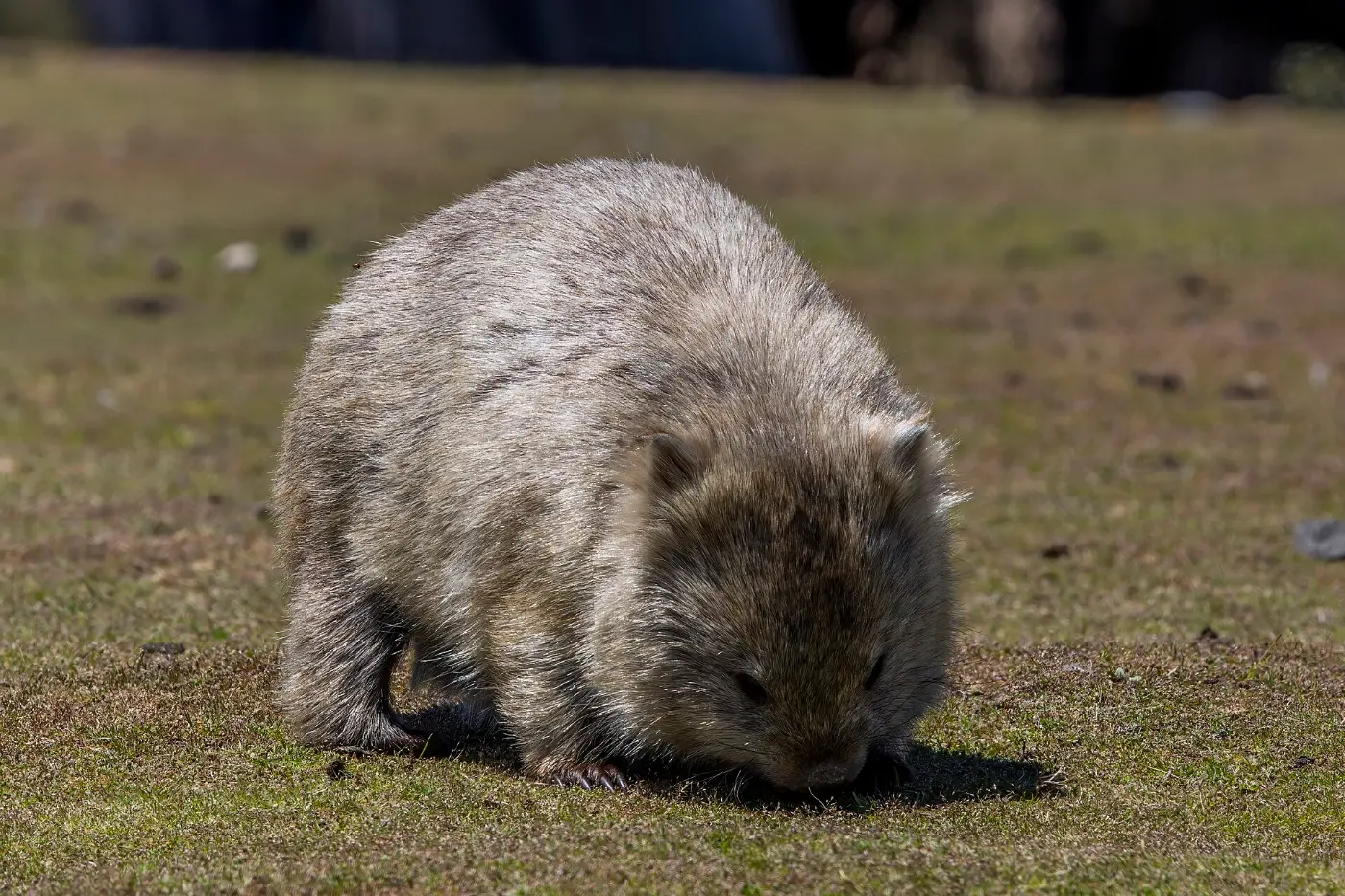 Photo: Charles J. Sharp, CC BY-SA 4.0
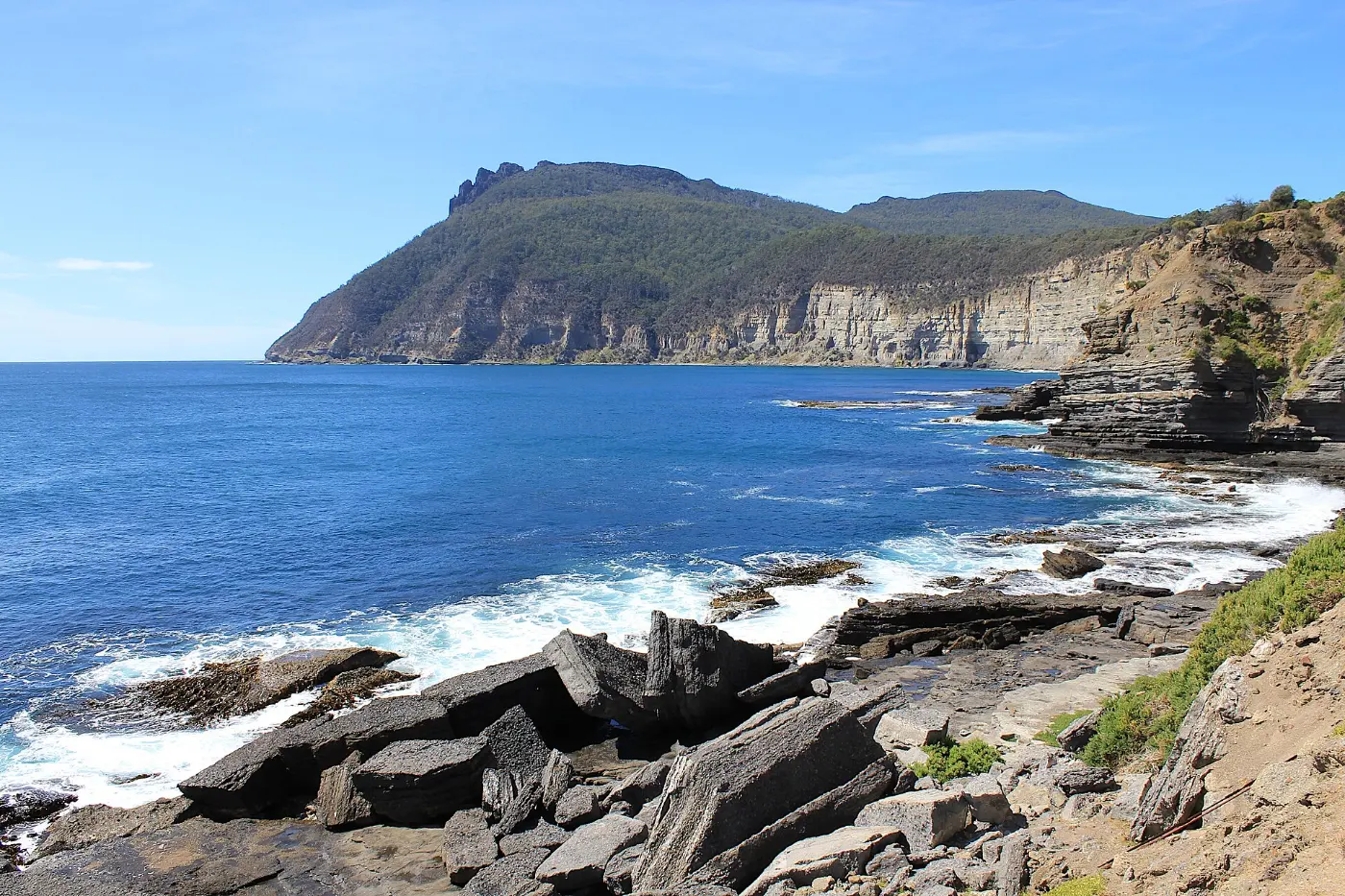 Photo: Kristina D.C. Hoeppner, CC BY-SA 2.0
Maria Island: wombats and the Painted Cliffs
- Getting there30-min ferry from Triabunna
- From HobartAbout 1 hr to Triabunna
- Time neededFull day
Maria Island is a car-free national park off the east coast, and it feels a world away. Step off the ferry at Darlington, a World Heritage-listed convict settlement, and you’ll almost certainly see wombats grazing on the grass within minutes. Kangaroos, Cape Barren geese and plenty of birdlife are everywhere, and Tasmanian devils roam at night.
The must-see is the Painted Cliffs, where the sea has worn the sandstone into swirls of orange, red and white. It’s an easy walk from Darlington and is best at low tide. The Fossil Cliffs are packed with ancient shells, and fit walkers can climb Bishop and Clerk for huge views. You can also hire bikes to cover more ground.
Encounter Maria Island runs the only ferry. In the summer timetable (September to April) the first boat leaves Triabunna at 8.30am and the last one back leaves the island at 4.15pm. In winter (May to August) there are fewer sailings and no ferries on Tuesdays or Thursdays. A shuttle bus connects with the ferry from Brooke Street Pier in Hobart.
Tip: Ferry bookings are essential. There are no shops or cafés on the island, so bring all your food and water. Check tide times when you check in, and don’t feed the wombats.
Tasmania’s great walks: book these early
Tasmania has two of Australia’s best-known multi-day hikes, and both need planning. If either is on your list, check availability early and plan it for the days straight after your course.
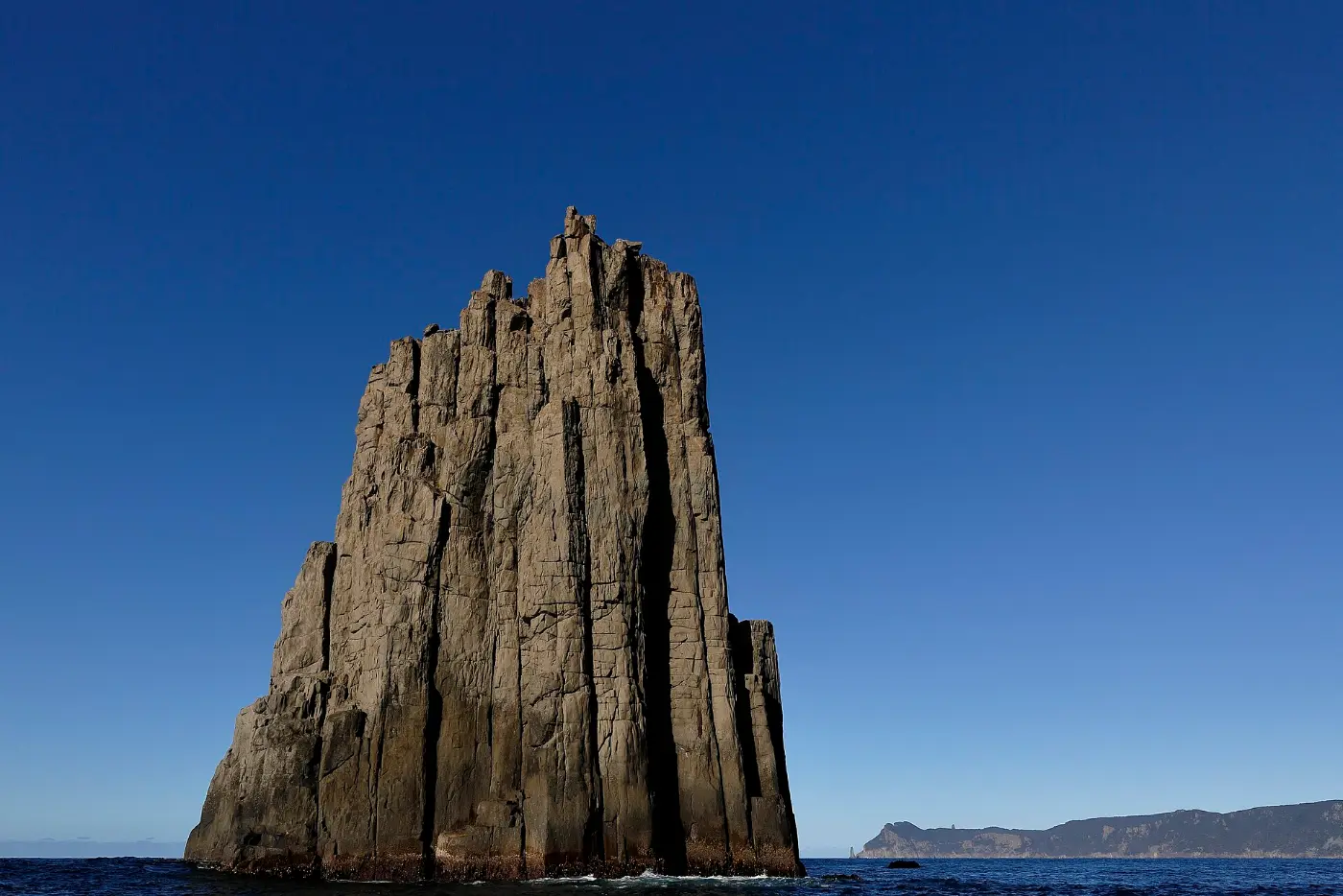
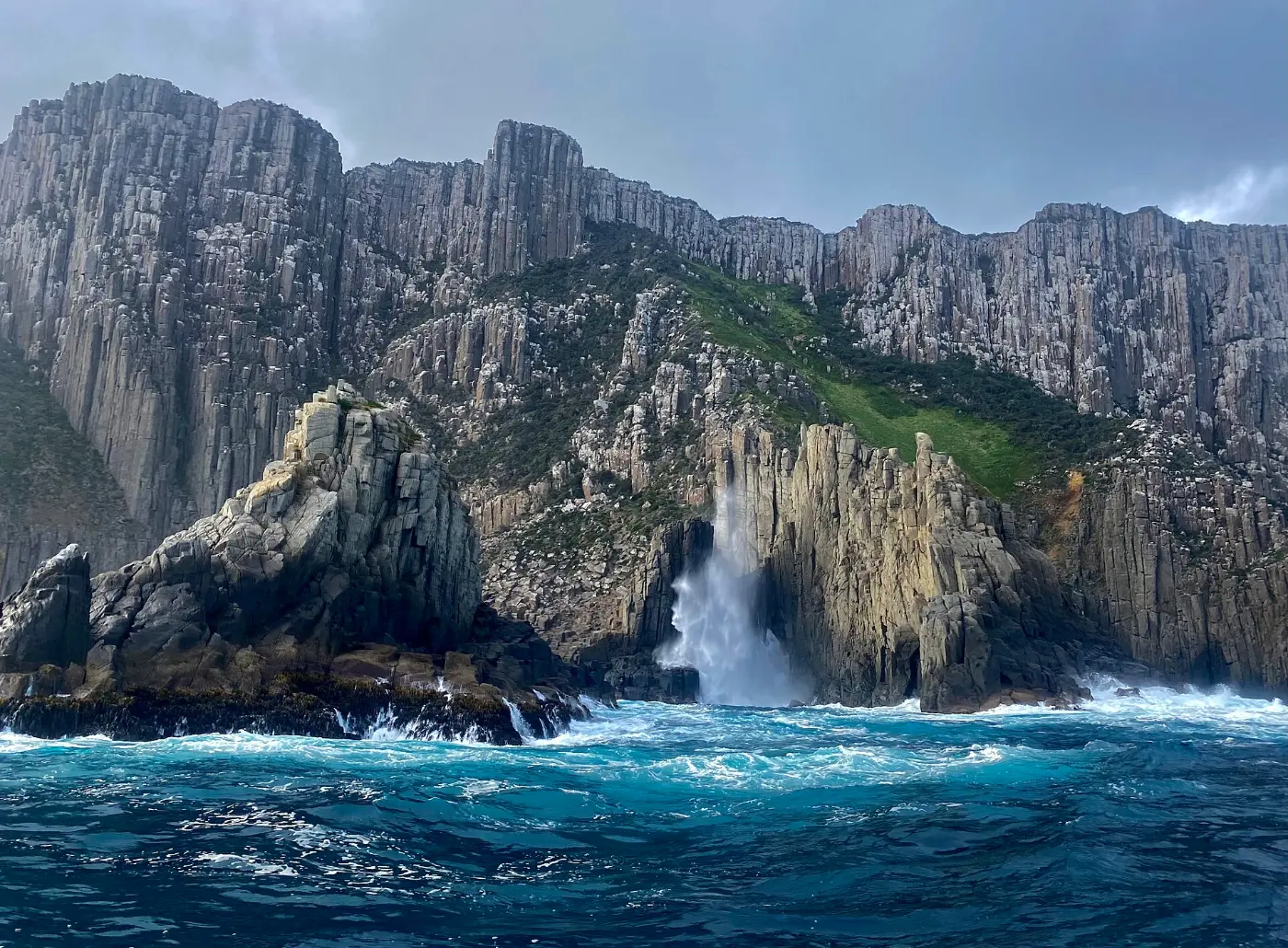 Photo: Jane6592, CC BY-SA 4.0
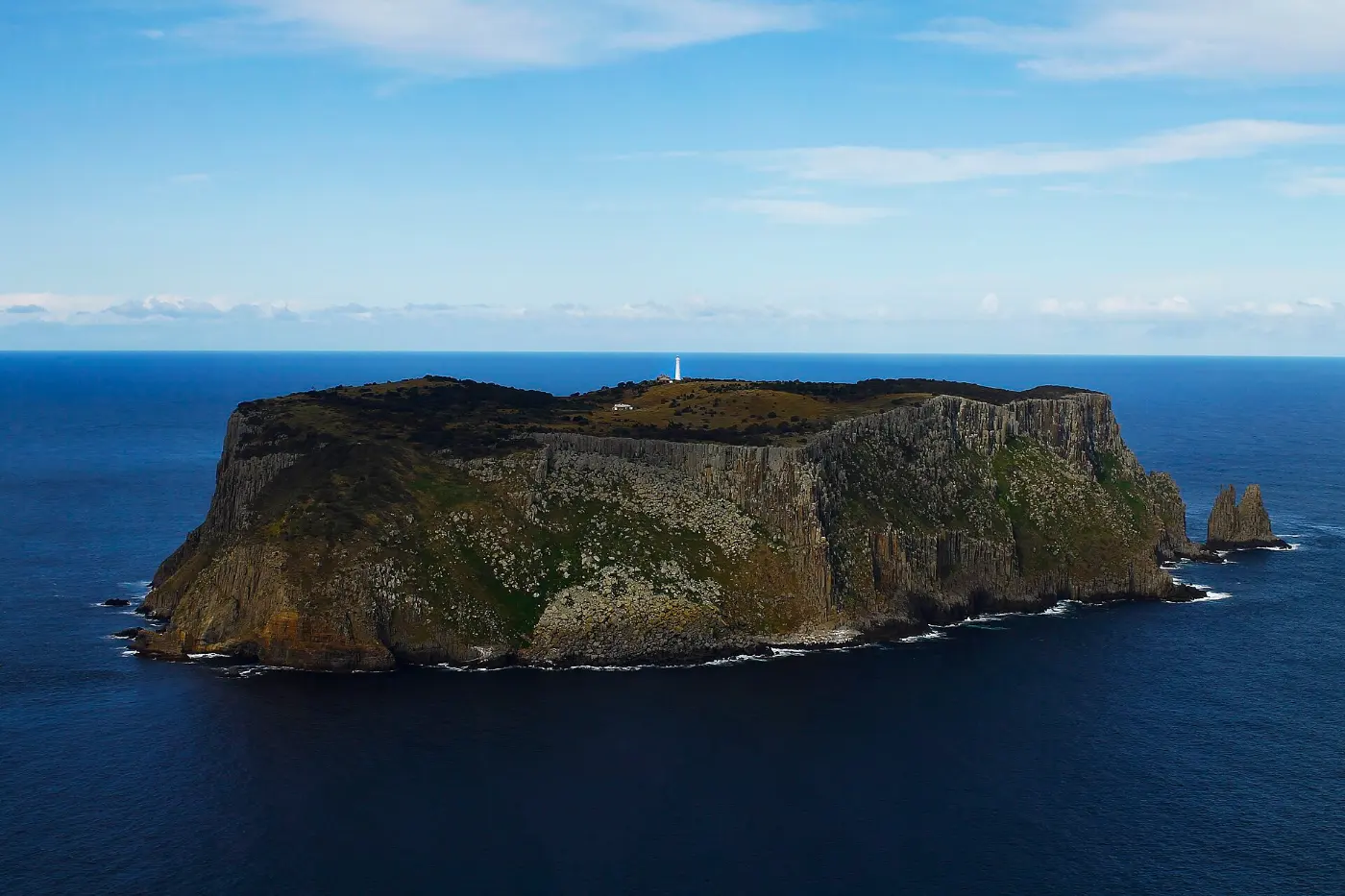 Photo: Luke Mitchell Cooper, CC BY-SA 4.0
The Three Capes Track: how to book it
- Distance48 km, 4 days and 3 nights
- Fee$650 per adult (standard rate)
- Start and finishPort Arthur to Fortescue Bay
The Three Capes Track follows the edge of Australia’s highest sea cliffs on the Tasman Peninsula, past Cape Pillar and Cape Hauy and the giant dolerite columns that rise out of the Southern Ocean. It’s designed for a wide range of ages and abilities, with a well-built track around a metre wide, so for many people it’s their first multi-day walk. The early days are shorter; the longest day is up to 19 km with about 650 m of climbing, which takes 6 to 7 hours.
What the booking fee includes
- Three nights in self-catered cabins on the track (Surveyors, Munro and Retakunna)
- A Pennicott Wilderness Journeys cruise from Port Arthur to the start at Denmans Cove (up to 75 minutes)
- Entry to Port Arthur Historic Site (valid for two years), plus car parking and secure lockers
- The bus from Fortescue Bay back to Port Arthur at the end
- The Encounters on the Edge guidebook, and national park entry for the walk plus a day either side
How to book
- Book online through Tasmania Parks and Wildlife Service. Bookings are essential and only 48 walkers can start each day, so summer dates fill months ahead.
- There’s no waitlist. If your dates are full, keep checking the availability page, as spaces open up when people change their plans.
- Standard rates are $650 per adult and $515 for concessions and children. Fees are reviewed each year.
- Questions? Email [email protected] or call 1300 827 727.
Prefer someone else to cook? The Tasmanian Walking Company runs guided Three Capes walks with private lodges, meals and transfers from Hobart, at a much higher price.
Tip: You carry your own food, sleeping bag and clothes, and the track is a fuel-stove-only area. It’s a perfect trip for the week after your course: the Port Arthur entry is already included.
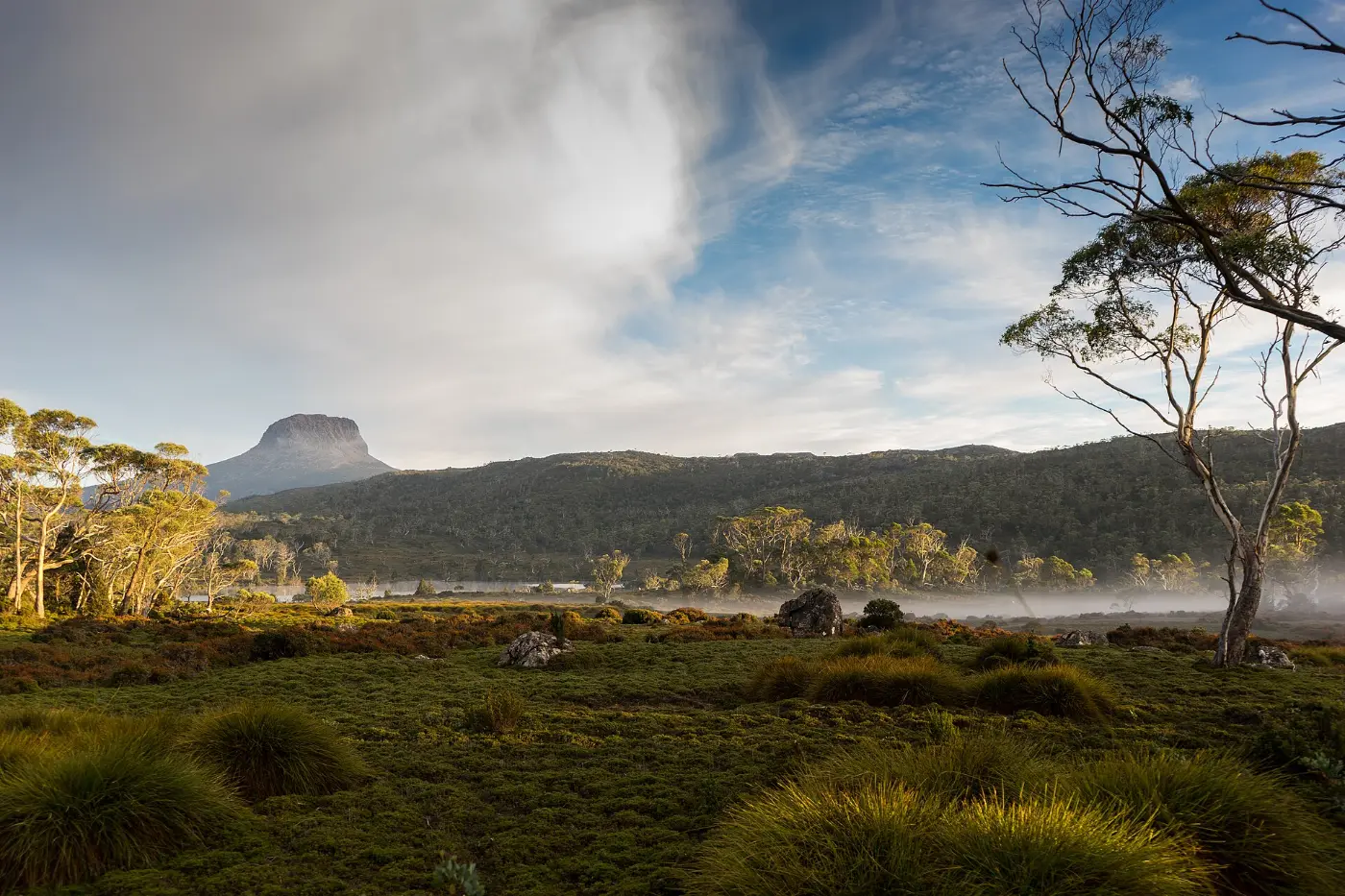 Photo: Andrew Jenssen, CC BY-SA 4.0
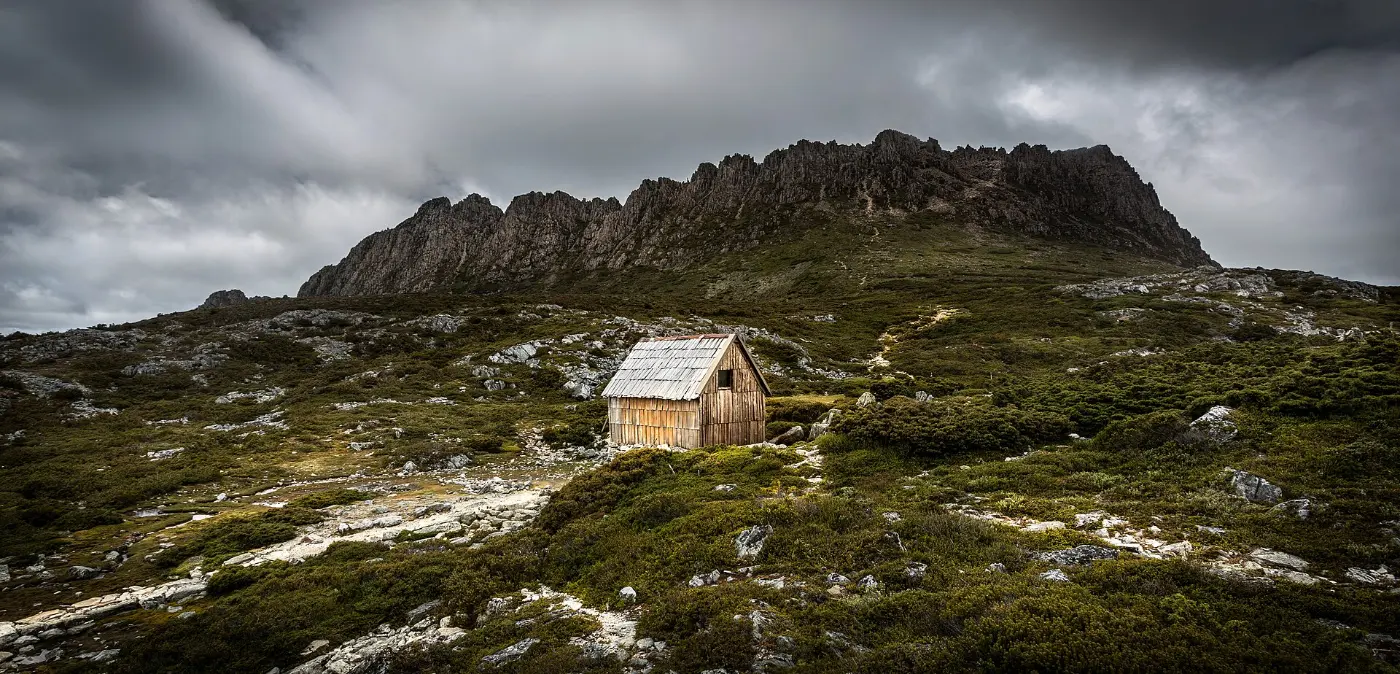 Photo: Darren Grattidge, CC BY-SA 4.0
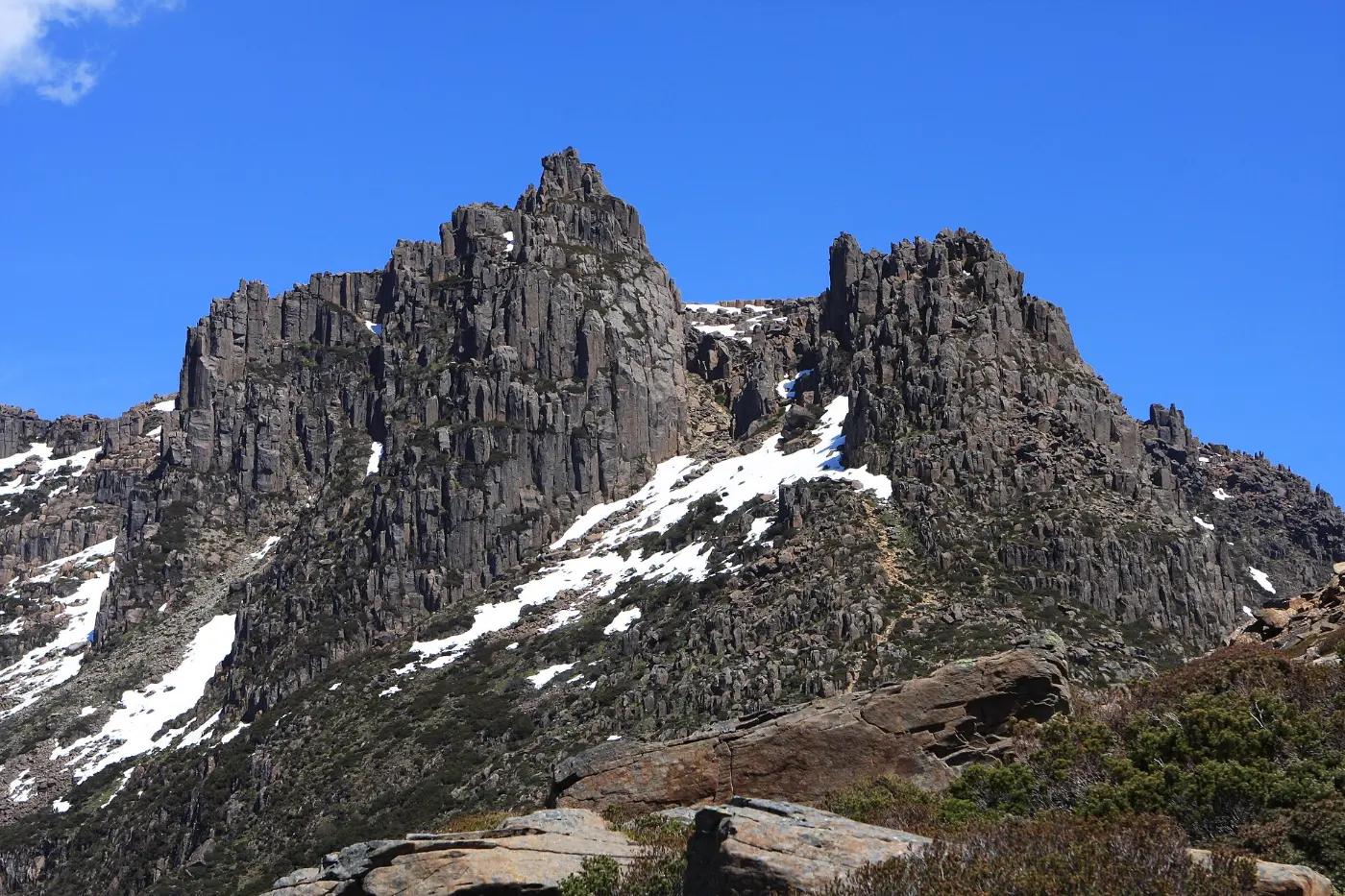 Photo: J Brew, CC BY-SA 2.0
The Overland Track: how to book it
- Distance65 km, 6 days one-way
- Fee$312 per adult (1 Oct to 31 May)
- Bookings open9am, first Tuesday in July
The Overland Track is Australia’s most famous alpine walk. It runs through the Tasmanian Wilderness World Heritage Area from Cradle Mountain to Lake St Clair, past glacial lakes, button-grass plains, rainforest and Mount Ossa, Tasmania’s highest peak. Cradle Mountain is only about an hour from our Sheffield and Lake Cethana base, so for some partners it’s the trip of a lifetime right on the doorstep. It is, however, a difficult walk even for well-prepared hikers.
How the booking season works
- From 1 October to 31 May you must book, and the fee is $312 per adult. It covers park entry for your walk and the shuttle from the Cradle Mountain Visitor Centre to the start of the track.
- Only 34 places are available each day. Bookings for each season open at 9am on the first Tuesday in July. In 2026 they opened on 7 July, and the peak December to March period was fully booked by 2pm the same day.
- Transport to Cradle Mountain and back from Lake St Clair is not included, so plan your pick-up before you go.
- From June to September there’s no booking fee, but you must register your walk and hold a parks pass. Winter conditions are only for experienced walkers.
- Questions? Email [email protected] or call 1300 827 727.
Tip: No space or no time for six days? You can get a taste of the Overland Track country on the Dove Lake circuit and Marions Lookout at Cradle Mountain. See our days off guide.
Three weekend getaways
Here’s how couples typically fit a weekend away around a CDA course. All three start from the north.
A weekend in Hobart
City, food and art
- Friday: drive down after training (about 2.5 hrs from Launceston).
- Saturday: Salamanca Market, Battery Point, then dinner on the waterfront.
- Sunday: morning ferry to MONA, lunch at Moorilla, and drive home that afternoon.
The east coast
Beaches, walks and wine
- Saturday: drive to Coles Bay (about 2.5 hrs), walk to the Wineglass Bay Lookout, oysters for lunch.
- Sunday: Cape Tourville at sunrise, lunch and the lookout tower at Devil’s Corner, then head home.
The Tasman Peninsula
Convict history and sea cliffs
- Saturday: drive to Eaglehawk Neck (about 3 hrs from Launceston) for Tasman Arch and the Devil’s Kitchen, explore Port Arthur in the afternoon, then the Ghost Tour after dark.
- Sunday: an early start on the Cape Hauy walk from Fortescue Bay (about 4 hrs), then the drive home.
Best on a long weekend
A week after your course: a day-by-day guide
If you can stay on for a week after your course, this is the trip we recommend. It’s a one-way road trip from Launceston (near our northern training sites) down the east coast to Hobart, covering most of the highlights in this guide without too much time in the car. Most days have less than two hours of driving.
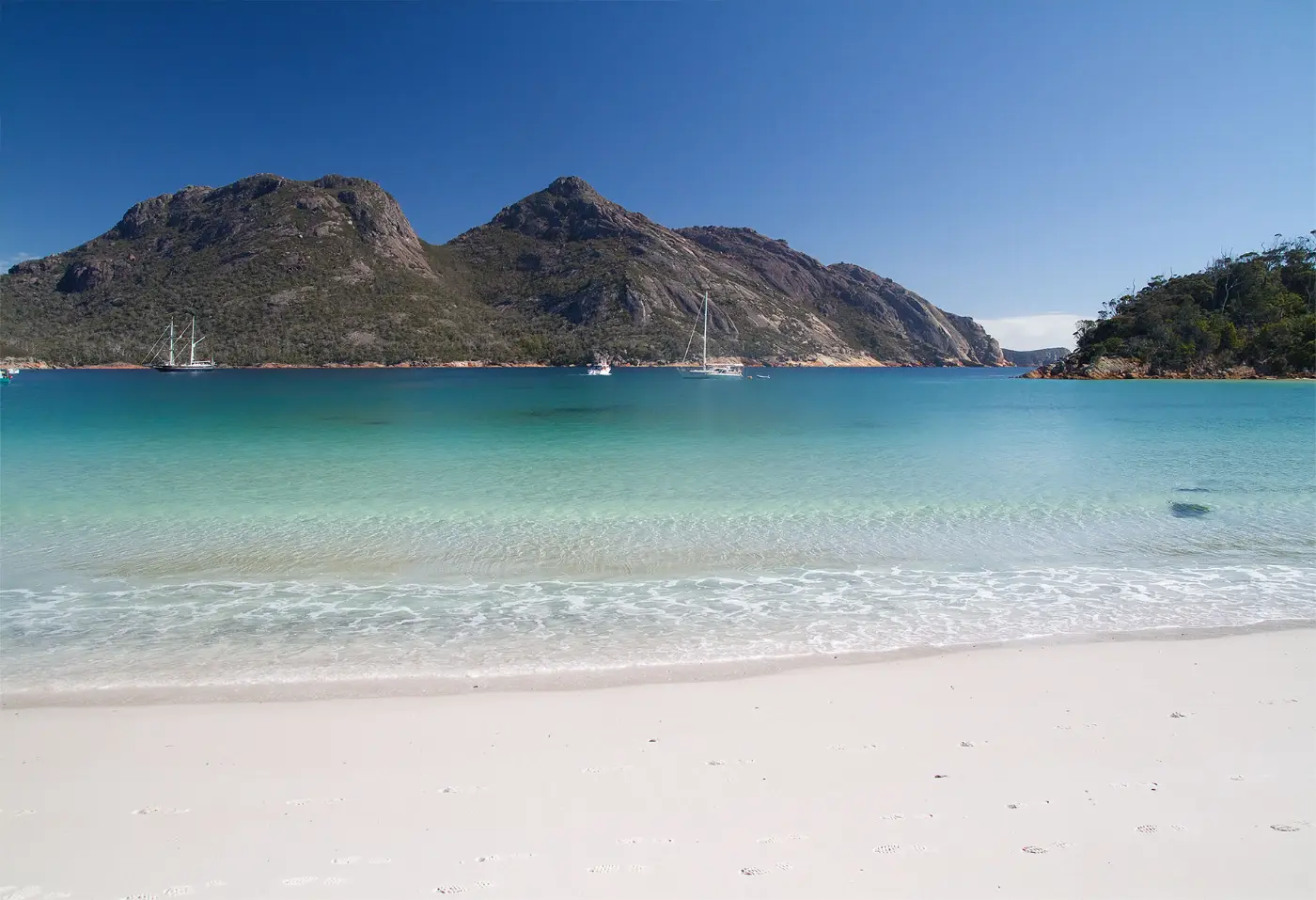 Photo: JJ Harrison, CC BY-SA 3.0
- Launceston
- →
- Freycinet
- →
- Maria Island
- →
- Port Arthur
- →
- Hobart
- →
- Bruny Island
- →
- Hobart
The plan starts on a Sunday, so the Ghost Tour falls on a Wednesday and you’re in Hobart for the Saturday market and MONA (which opens Thursday to Monday). If your dates are different, shuffle the days around those three.
Launceston to Freycinet
About 2.5 hrs by car
- Morning: pick up supplies in Launceston and drive to Coles Bay, the gateway to Freycinet National Park. Buy your parks pass online before you leave.
- Afternoon: walk to the Wineglass Bay Lookout (2.6 km return, 1 to 1.5 hrs). If you’re keen, continue down to the beach for a swim (6 km return in total, 2.5 to 3.5 hrs).
- Evening: drive out to Cape Tourville for sunset over the coast, then dinner in Coles Bay.
Stay: Coles Bay or Freycinet
Book ahead: Coles Bay accommodation, which books out in summer.
Wineglass Bay by water, then south
About 1.5 hrs driving, plus stops
- Morning: join the Wineglass Bay Cruise from Coles Bay (9.45am to 2.30pm). Look out for dolphins, seals, sea eagles and, in season, whales. Not a boat person? Walk the Hazards Beach circuit instead.
- Afternoon: oysters at Freycinet Marine Farm, then head south. Stop at Devil’s Corner (open 10am to 5pm) to climb the lookout tower and taste the wines, and stretch your legs in Swansea.
- Evening: settle in at Orford or Triabunna, ready for the morning ferry.
Stay: Orford or Triabunna (two nights)
Book ahead: The Wineglass Bay Cruise.
Maria Island
30-min ferry each way from Triabunna
- Morning: catch the 8.30am Encounter Maria Island ferry. Wombats will greet you at Darlington, the World Heritage convict settlement.
- Middle of the day: walk to the Painted Cliffs (best at low tide; check the tide times at check-in) and the Fossil Cliffs. Hire bikes to cover more ground, or climb Bishop and Clerk if you’re fit.
- Afternoon: last ferry back at 4.15pm. Celebrate with a gin at Spring Bay Distillery or fish and chips on the Triabunna wharf.
Stay: Orford or Triabunna
Book ahead: The Maria Island ferry (essential), and pack lunch, snacks and water: there are no shops on the island.
The Tasman Peninsula and Port Arthur
About 1.5 to 2 hrs from Orford
- Morning: drive to Eaglehawk Neck. Walk on the Tessellated Pavement, then see Tasman Arch, the Devil’s Kitchen and the Blowhole, all a few minutes apart.
- Afternoon: Port Arthur Historic Site. Take the included harbour cruise and the 45-minute Essentials Tour, then explore the Penitentiary, the Separate Prison and the gardens. Your ticket is valid for two consecutive days, so you don’t need to rush.
- Evening: the 90-minute lantern-lit Ghost Tour (Wednesday to Sunday).
Stay: Port Arthur or Eaglehawk Neck (one night)
Book ahead: Port Arthur entry and the Ghost Tour.
Cape Hauy, then on to Hobart
About 90 mins to Hobart, plus the Richmond detour
- Morning: an early start on the Cape Hauy walk from Fortescue Bay (9.4 km return, about 4 hrs). It’s a real highlight: sheer dolerite columns rising out of the ocean. Prefer something easier? Use day two of your Port Arthur ticket, and visit Remarkable Cave and McHenry Distillery.
- Afternoon: detour through Richmond on the way to Hobart. Walk across the convict-built Richmond Bridge, then taste at a Coal River Valley cellar door or two.
- Evening: check in to Hobart and head to Lark’s cellar door or The Still for a whisky flight, then dinner in Salamanca.
Stay: Hobart (three nights)
Bruny Island
30 mins to the Kettering ferry, then a 20-min crossing
- Morning: catch an early SeaLink ferry from Kettering. Head straight to The Neck and climb to Truganini Lookout before the crowds.
- Middle of the day: eat your way down the island: oysters at Get Shucked, cheese at Bruny Island Cheese and Beer Co, honey and chocolate on the way. Or take Pennicott’s three-hour wilderness cruise from Adventure Bay along the sea cliffs.
- Afternoon: Cape Bruny Lighthouse and Adventure Bay, then a ferry back to Hobart. (In penguin season, you can stay on to watch them come ashore at The Neck at dusk.)
Stay: Hobart
Book ahead: A Bruny Island cruise if you want one. Fill up with fuel before the ferry.
Salamanca, MONA and kunanyi
All in and around Hobart
- Morning: Salamanca Market (8.30am to 3pm). Grab breakfast at a stall, then wander up through Battery Point.
- Afternoon: take the ferry from Brooke Street Pier to MONA for an afternoon of art, with a glass of wine at Moorilla.
- Evening: drive up kunanyi / Mount Wellington for sunset over the city (pack a warm jacket), then a farewell dinner on the waterfront. Fly home from Hobart the next day.
Stay: Hobart
Book ahead: MONA entry and ferry, plus a table for your farewell dinner.
Before you go
- Car hire: picking up in Launceston and dropping off in Hobart is easiest, but check for one-way fees. Alternatively, loop back north via the Midland Highway (about 2.5 hrs) and fly out of Launceston.
- Parks pass: a Holiday Vehicle Pass covers Freycinet, Maria Island, Tasman and South Bruny national parks for the whole trip.
- Accommodation: you need five bases: Coles Bay, Orford or Triabunna, the Tasman Peninsula and Hobart. Book them as soon as your course dates are confirmed, especially between December and February.
- Winter changes: from May to August the Maria Island ferry doesn’t run on Tuesdays or Thursdays. Move Maria Island to Wednesday and Port Arthur to Thursday, which still gives you a Ghost Tour night.
- Diving: by the end of the week you’re well clear of your last dive for kunanyi and the flight home, but follow the flying-after-diving guidance your trainers gave you on the final day.
Make it your own
Booking cheat sheet
Summer (December to February) is Tasmania’s busiest season. Here’s what to book and how far ahead we’d suggest:
| Experience | Book with | Our advice |
|---|---|---|
| Overland Track (Oct to May) | Tasmania Parks and Wildlife Service | On opening day (first Tuesday in July) for summer dates |
| Three Capes Track | Tasmania Parks and Wildlife Service | Several months ahead for summer; winter is easier |
| Maria Island ferry | Encounter Maria Island | Essential; a week or two ahead in summer |
| Wineglass Bay cruise | Wineglass Bay Cruises (Pennicott) | A week or two ahead in summer |
| MONA entry and ferry | MONA website | A few days ahead; earlier for summer weekends |
| Port Arthur Ghost Tour | Port Arthur Historic Site | A few days ahead |
| Distillery tours | Each distillery | A few days ahead; many are by appointment |
| National parks pass | Parks and Wildlife Service online | Before your first park visit |
Frequently asked questions
Can my partner come to Tasmania while I do my dive course?
Yes. Many CDA students bring a partner or family. Training days are for students only, but evenings, days off and the time after your course are yours to explore Tasmania together.
How far is Hobart from CDA’s Tasmanian training sites?
CDA trains at Beauty Point and Lake Cethana in northern Tasmania. Hobart is about 2.5 hours’ drive from Launceston, which is around 45 minutes from Beauty Point, so it works well as a weekend trip.
When should we book the Three Capes Track or the Overland Track?
Book both through Tasmania Parks and Wildlife Service as early as you can. Overland Track bookings for October to May open at 9am on the first Tuesday in July, with only 34 places a day. The Three Capes Track takes 48 walkers a day, so summer dates usually fill months ahead.
Do we need a national parks pass?
Yes. A valid parks pass is required for Tasmania’s national parks, including Freycinet, Tasman, Maria Island and South Bruny. A Holiday Vehicle Pass covers one car and up to seven passengers for up to two months.
What’s the best way to spend a week in Tasmania after a dive course?
A one-way road trip from Launceston to Hobart works well: two days at Freycinet and on the east coast, a day on Maria Island, a night on the Tasman Peninsula for Port Arthur and Cape Hauy, then three nights in Hobart for Bruny Island, Salamanca Market, MONA and kunanyi / Mount Wellington.
Train where others take their holidays
See why so many students choose to train in Tasmania, check the next Tasmanian intakes, find somewhere to stay on our accommodation page, or plan your days off near training with 10 things to do in northern Tasmania.
Keep reading
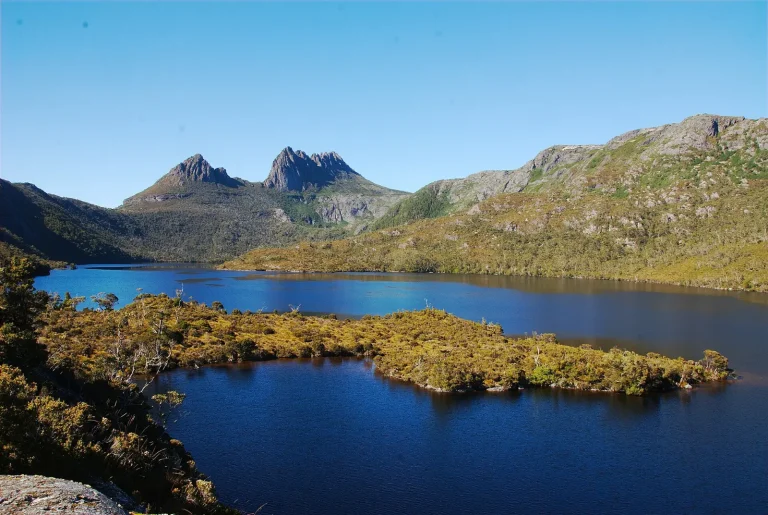 CDA blog10 Things to Do in Tasmania on Your Days OffCradle Mountain, penguins, devils, caves and wineries, all close to our northern training sites.Read article
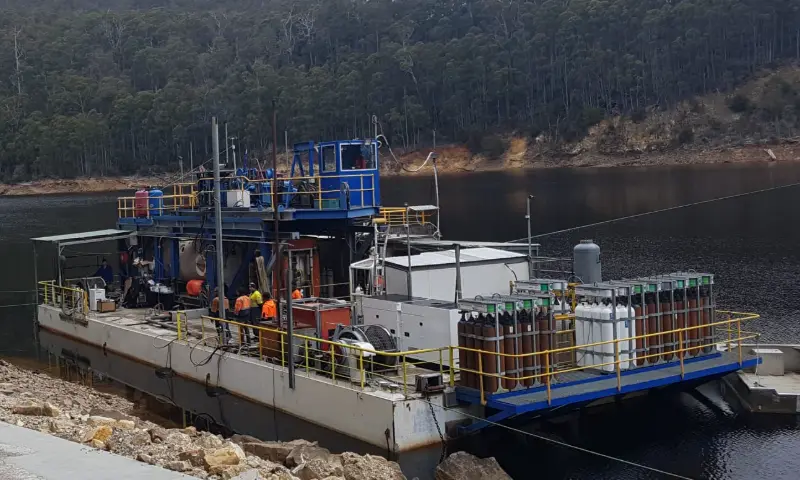 CDA blogHow to Become a Saturation Diver and Find Sat WorkThe qualification pathway to saturation diving, and six practical steps to land sat work.Read article
 CDA blogShelf Subsea DonationDeepOcean (formerly Shelf Subsea) donated offshore diving equipment to support CDA’s saturation training.Read article
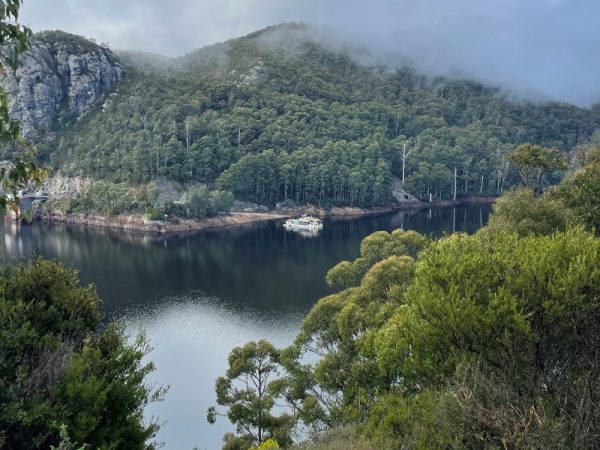 CDA blogHow To Become A Commercial Diver!A step-by-step guide to starting your career as a commercial diver in Australia.Read article
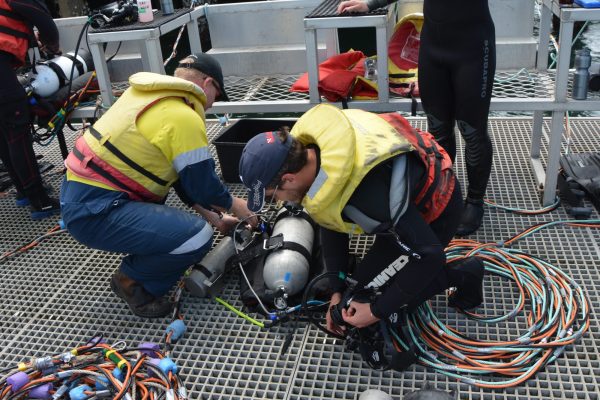 CDA blogPast Offshore Diving Student ReviewA former student on training as an offshore air diver with CDA.Read article
 CDA blogHow Much Does a Commercial Diver Earn?What commercial divers earn, and what affects pay onshore and offshore.Read article
 CDA blogWhat it means to work as a professional diver for remunerationWhat occupational divers do and the career paths open to them.Read article
 CDA blogCourse RequirementsThe prerequisites you need before starting an ADAS, IMCA or ADCI course.Read article
 CDA blogHow to renew your ADAS certificationHow to renew an expired ADAS diver, supervisor or medical certificate.Read article
 CDA blogTo Do Before You StartHow to prepare for your commercial diving course with CDA.Read article
 CDA blogFive of the most important underwater and marine knotsFive essential knots every working diver should know.Read article
 CDA blogAustralian Diver Accreditation SchemeWhat ADAS is and how it compares with HSE, DCBC and other schemes.Read article